Why Brenham Retail Stores Are Hiring Luxury Home Builders to Create Unforgettable Shopping Experiences

Retail News for luxury home builder Brenham TX

Retail has changed dramatically. Customers no longer enter a store simply to locate a product, make a purchase, and leave. They expect an experience that feels personal, visually appealing, comfortable, and memorable. Every detail—from the entrance and lighting to the shelving, flooring, checkout counter, and fitting rooms—contributes to how shoppers perceive a business.

This shift has encouraged many Brenham retailers to look beyond conventional commercial construction companies when creating or renovating their stores. Instead, they are turning to luxury home builders who understand custom design, exceptional craftsmanship, premium materials, and the importance of creating spaces that produce an emotional response.

A successful retail store must do more than hold inventory. It must communicate the company’s personality, support efficient daily operations, and give customers a reason to stay longer. Luxury home builders possess many of the design and construction skills needed to accomplish these goals.

As competition continues to grow across the Texas retail sector, a distinctive physical environment can help an independent business capture attention, build customer loyalty, and create a shopping destination people want to recommend. 🛍️

Retail Stores Have Become Branded Destinations

Modern shoppers can purchase almost anything online. A physical store must therefore offer something that a website cannot fully reproduce. That advantage is the experience of entering a carefully designed environment, seeing products in person, interacting with knowledgeable employees, and feeling connected to a local business.

A thoughtfully built store can make shopping feel like an event rather than a transaction. Customers notice when materials feel substantial, displays are carefully integrated into the architecture, lighting enhances the merchandise, and the layout allows them to move comfortably through the space.

The scale of the opportunity is significant. According to the U.S. Census Bureau’s Texas QuickFacts, Texas recorded more than $608 billion in retail sales during 2022. More recent information from the Texas Comptroller of Public Accounts reported that state sales tax revenue reached $4.7 billion in April 2026, an increase over the same month in the previous year.

These numbers demonstrate the economic importance of retail throughout the state. They also reinforce the need for Brenham businesses to distinguish themselves within an active and competitive marketplace.

Brenham Offers Retailers a Distinctive Local Identity

Brenham occupies a valuable position between Houston and Austin, providing local businesses with access to residents, regional shoppers, travelers, and tourists. The community combines small-town hospitality with a recognizable cultural identity rooted in history, agriculture, architecture, entrepreneurship, and Texas tradition.

The Washington County Chamber of Commerce describes Brenham and Washington County as a place where businesses can launch, grow, and expand. The area’s historic downtown, wineries, lodging accommodations, museums, entertainment venues, and community attractions help create steady opportunities for retail traffic.

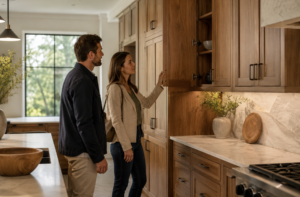
Retailers can benefit from this identity by creating stores that feel connected to the community rather than copied from a generic national design. Reclaimed wood, natural stone, custom cabinetry, locally inspired colors, handcrafted fixtures, and architectural details can help a store reflect the character of the region.

The history and culture of Texas also provide extensive creative inspiration. Retailers can incorporate regional textures, materials, artwork, and design elements without turning the store into a predictable theme. A skilled custom builder can create a sophisticated interpretation of Texas style that feels authentic, elegant, and appropriate for the brand.

Luxury Residential Expertise Translates Naturally to Retail Construction

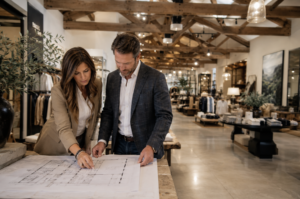
Luxury home builders specialize in creating highly customized spaces around the needs, preferences, and lifestyles of their clients. That same approach can be extremely valuable when applied to a retail environment.

A conventional commercial contractor may focus primarily on completing the required construction within the allotted budget and schedule. A luxury builder is more likely to examine how every surface, transition, fixture, and finish contributes to the complete experience.

Working with a luxury home builder Brenham TX gives a retailer access to expertise in custom millwork, architectural detailing, premium flooring, decorative lighting, integrated storage, specialty finishes, and cohesive interior design.

These capabilities can be adapted to boutiques, furniture stores, specialty food shops, jewelry stores, home décor retailers, gift shops, galleries, showrooms, and other customer-facing businesses. The result is a retail space that feels intentional rather than assembled from standard commercial components.

Exceptional Craftsmanship Influences Customer Perception

Customers form opinions about a store within moments of entering. They may not consciously inspect every construction detail, but they notice the overall feeling created by those details.

Uneven trim, harsh lighting, poorly placed displays, visible wiring, inexpensive fixtures, and awkward transitions can make a business feel less established. By contrast, precise craftsmanship can communicate professionalism, stability, quality, and attention to detail.

This is especially important for retailers selling premium products. A customer considering fine jewelry, custom furnishings, designer clothing, specialty gifts, gourmet products, or luxury accessories expects the environment to support the perceived value of the merchandise.

A beautiful product displayed on an ordinary plastic shelf loses some of its emotional impact. The same product presented inside custom cabinetry with carefully directed lighting can feel more distinctive and desirable.

Luxury builders understand this relationship between presentation and perceived value. They know that construction is not merely functional. It becomes part of the retailer’s marketing strategy.

Custom Layouts Can Encourage Customers to Stay Longer

The layout of a retail store affects how customers move, what they notice, and how much time they spend browsing. A confusing or overcrowded environment can cause shoppers to leave before discovering everything the business offers.

Luxury builders are accustomed to designing residential spaces around natural movement. They consider sightlines, traffic patterns, focal points, transitions, lighting, comfort, and the relationship between different areas. These same principles can improve a retail floor plan.

A custom layout can guide customers through featured products, seasonal collections, demonstration areas, fitting spaces, consultation zones, and checkout counters without making the path feel restrictive. Architectural features can draw attention toward important displays while providing enough open space to prevent the store from feeling crowded.

Seating areas, refreshment stations, private consultation spaces, and comfortable fitting rooms can further improve the experience. These features encourage shoppers to relax, spend additional time in the store, and interact more deeply with the brand.

The Store’s Architecture Can Tell the Brand’s Story

Every retailer has a story. Some businesses are built around family traditions, while others celebrate local craftsmanship, modern innovation, sustainability, fashion, hospitality, or Texas culture.

A custom retail environment can communicate that story without relying entirely on signs and written descriptions. Materials, shapes, colors, lighting, furniture, fixtures, and architectural details can all reinforce the identity of the business.

A rustic specialty store may benefit from exposed beams, warm wood, stone accents, and handcrafted display tables. A modern boutique may require clean lines, concealed lighting, polished surfaces, and minimalist shelving. A high-end furniture showroom may need residential-style rooms that help customers imagine products inside their own homes.

Luxury home builders are particularly effective at creating this type of emotional storytelling because residential design is deeply connected to lifestyle. They know how to make a space feel inviting, aspirational, comfortable, and personal.

Texas Retailers Need to Compete on More Than Price

Competing entirely on price can be difficult for independent retailers. Large chains and online marketplaces often have greater purchasing power, larger advertising budgets, and highly developed distribution systems.

Local retailers can compete through service, expertise, personal relationships, unique merchandise, community involvement, and memorable experiences. The store itself becomes an important part of that competitive strategy.

The National Retail Federation’s report on retail in Texas states that retail supports a substantial portion of employment in the state. The Texas Retailers Association also identifies retail as a major force within the Texas economy and provides advocacy and educational support to businesses across the sector.

Within such a large industry, ordinary spaces are easy to overlook. A store that feels custom-built, locally relevant, and visually impressive has a better chance of standing out.

Customers may initially visit because of a product, promotion, or recommendation. A remarkable environment can turn that first visit into an experience worth repeating.

Luxury Builders Understand the Importance of Fine Details

The most memorable stores are often defined by details that customers experience without consciously analyzing them. Door hardware feels solid. Cabinets close smoothly. Lighting has the correct warmth. Flooring transitions are seamless. Displays appear integrated into the room instead of added afterward.

Luxury builders routinely coordinate these details in custom homes. They work with designers, cabinetmakers, electricians, flooring specialists, stone fabricators, painters, and other skilled trades to create a unified final result.

This coordination is valuable in retail construction because the display systems, technology, security equipment, lighting, storage, signage, and checkout areas must work together. Poor coordination can produce visible clutter and operational problems.

A builder with a detail-oriented process can help ensure that functional requirements are incorporated into the design from the beginning. Electrical outlets can be placed where equipment will actually be used. Storage can be concealed without becoming inaccessible. Lighting can be adjusted for different products. Security devices can be integrated without dominating the décor.

A Beautiful Store Must Also Perform Efficiently

Visual appeal is only one part of successful retail design. The environment must also support employees, inventory management, deliveries, customer service, maintenance, accessibility, and safety.

Luxury home builders are experienced in balancing beauty with everyday performance. A high-end kitchen, for example, must look impressive while supporting cooking, cleaning, storage, and entertaining. A retail store requires the same balance between appearance and function.

Durable materials must be selected for high-traffic areas. Display surfaces must withstand frequent use. Employee work areas must be organized efficiently. Storage must accommodate inventory without reducing valuable selling space.

The builder must also account for local permits, inspections, accessibility requirements, fire safety standards, electrical capacity, plumbing needs, and other commercial construction considerations. Early planning helps prevent functional necessities from becoming unattractive additions late in the project.

The Brenham and Washington County Economic Development organization provides resources to help local businesses understand development processes, available spaces, permits, site plans, and applicable ordinances. Retailers can combine these local resources with experienced construction guidance to move through the planning process more effectively.

Custom Construction Can Support Social Media Marketing

An attractive store can become a powerful source of digital marketing content. Customers frequently photograph distinctive displays, feature walls, mirrors, artwork, product arrangements, and architectural elements.

A visually memorable environment gives people a reason to share their visit on social media. This user-generated content can introduce the business to new audiences without requiring the retailer to create every post personally.

Luxury builders can intentionally include areas that photograph well. A dramatic entrance, branded wall, creative seating area, decorative installation, or seasonal display location can become a recognizable part of the customer experience.

The design should remain timeless enough to support the business for years, while also providing flexible locations that can be updated for holidays, promotions, new collections, and community events.

A store that looks impressive online can attract people who want to experience the setting in person. This creates a valuable connection between physical retail and digital discovery. 📸

An Experienced Local Builder Can Protect the Retailer’s Investment

A retail renovation or new construction project represents a significant investment. Poor planning can lead to delays, change orders, operational disruptions, and costly corrections.

An experienced local builder understands regional construction conditions, available materials, local subcontractors, weather patterns, inspection processes, and community expectations. That knowledge can help the project move more smoothly.

Local accountability also matters. A builder whose reputation is connected to the Brenham community has a strong incentive to deliver quality work and maintain positive relationships.

This is particularly valuable when the store needs future updates, repairs, additions, or new locations. A long-term relationship with a trusted builder can provide consistency as the retail business grows.

High-Quality Construction Creates Long-Term Business Value

A well-built retail environment can continue producing value long after the grand opening. Durable finishes reduce maintenance. Flexible layouts make seasonal changes easier. Efficient storage improves operations. Thoughtful lighting reduces the need for temporary fixtures. Timeless design prevents the store from looking dated after only a few years.

Quality construction can also strengthen the value and marketability of the property. A professionally renovated commercial space may appeal to future tenants, buyers, lenders, and investors.

Most importantly, a carefully designed store supports the reputation of the retailer. It creates an environment that employees can be proud of and customers can trust.

The investment is not limited to walls, flooring, cabinets, and lighting. It is an investment in the way people perceive the business.

Conclusion

Brenham retail stores operate within a competitive marketplace where products alone may not be enough to create lasting customer loyalty. Shoppers increasingly value environments that feel authentic, comfortable, attractive, and worth visiting.

Luxury home builders bring a distinctive combination of creativity, craftsmanship, customization, construction knowledge, and attention to detail. These strengths allow them to transform ordinary commercial interiors into memorable retail destinations.

From custom cabinetry and premium materials to carefully planned layouts and integrated lighting, every element can reinforce the retailer’s brand and improve the customer experience. The completed store becomes more than a location where merchandise is sold. It becomes a physical expression of the business and its connection to the Brenham community.

For local retailers preparing to renovate, expand, or build a new location, luxury residential expertise can provide a meaningful competitive advantage. A thoughtfully constructed store can attract attention, encourage longer visits, strengthen customer trust, support social media visibility, and produce long-term value.

The future of successful brick-and-mortar retail belongs to businesses that give customers something memorable. In Brenham, that experience can begin with exceptional design and craftsmanship. ✨

Why Retail Stores Can’t Afford to Ignore Old Attic Insulation

Retail News for Attic Insulation Removal and Replacement

Retail store owners spend a tremendous amount of time thinking about displays, inventory, foot traffic, lighting, signage, staffing, customer service, and sales. Every detail matters because retail is a business built around experience. Customers notice when a store feels clean, comfortable, organized, and professional. They also notice when something feels off, even if they cannot immediately explain why. One of the most overlooked factors behind that customer experience is sitting above the ceiling: old attic insulation.

For many retail spaces, attic insulation is not something that gets reviewed unless there is a major problem. It may have been installed years ago, ignored through multiple tenants, exposed to pests, affected by moisture, compressed by time, or damaged during previous construction work. When insulation gets old, contaminated, wet, or ineffective, it can quietly impact energy costs, indoor comfort, air quality, odor, and even the way customers feel while shopping.

In a retail environment where every sale matters, ignoring old attic insulation can become an expensive mistake. The store may look good on the outside, but the building itself may be working against the business every hour the lights are on and the doors are open.

The Retail Store Experience Starts With Comfort

Retail has always been about more than simply selling products. According to Wikipedia’s overview of retail, retail businesses connect goods and services directly to consumers, which means the physical shopping environment plays a major role in how customers interact with a brand. A store that is too hot, too cold, stuffy, drafty, or uncomfortable can shorten shopping time and reduce the chances of a customer browsing, engaging, and buying.

Old attic insulation can make it harder to maintain a consistent indoor temperature. In warm months, heat trapped in the attic can radiate downward into the sales floor. In cold months, poorly performing insulation can allow conditioned air to escape too quickly. This forces the HVAC system to work harder to keep the store comfortable.

For retail stores, comfort is not just a facilities issue. It is a customer retention issue. A shopper who feels uncomfortable is less likely to stay long, try on products, compare options, or enjoy the experience. Employees also feel the difference. A staff that works all day in an inconsistent indoor environment may become less productive, less energetic, and less focused on customer service.

Old Insulation Can Increase Operating Costs

Retailers already face enough pressure from rising labor costs, inventory expenses, rent, utilities, marketing, and competition. Industry coverage from the National Retail Federation continues to show how retail businesses are adapting to changing consumer behavior, technology, and economic pressure. In that kind of environment, wasted energy is not something store owners can afford to overlook.

When attic insulation no longer performs well, heating and cooling systems often run longer than necessary. That means higher utility bills month after month. Even a modest increase in energy use can add up quickly for a retail store because commercial spaces often operate for long hours, use bright lighting, run equipment, and need steady climate control during business hours.

Old insulation can lose effectiveness for several reasons. It may become compressed, shifted, damp, contaminated, or unevenly distributed. Gaps in coverage can create hot and cold spots throughout the building. Some areas of the store may feel fine while others feel uncomfortable, leading employees to constantly adjust the thermostat. These adjustments may provide temporary relief, but they rarely fix the real problem.

Investing in proper insulation improvement can help reduce wasted energy and support a more efficient building. For store owners who are already watching margins closely, that can make a meaningful difference over time.

Poor Attic Conditions Can Affect Indoor Air Quality

Indoor air quality matters in every commercial building, but it is especially important in retail. Customers walk in expecting a clean, pleasant environment. Employees spend long shifts inside the store. Merchandise, fabrics, displays, packaging, and stored goods can all be affected by dust, odor, and moisture.

Old attic insulation may hold dust, rodent droppings, insects, moisture, mold spores, or other contaminants. When air moves through gaps, ceiling penetrations, ductwork leaks, or poorly sealed areas, those contaminants can contribute to unpleasant odors or poor air quality below. Even if the attic is out of sight, the effects may still reach the sales floor.

The U.S. Census Bureau’s retail sales reports show how closely retail performance is tracked because consumer spending is such an important part of the economy. At the individual store level, however, small environmental problems can influence whether customers feel good enough to stay and shop. A store that smells musty, feels dusty, or seems poorly maintained can damage trust quickly.

Retail customers may not know that old attic insulation is contributing to the problem. They simply know the store does not feel as fresh, clean, or comfortable as it should. That perception can affect reviews, repeat visits, employee morale, and the overall brand image.

Moisture and Pest Problems Can Start Above the Ceiling

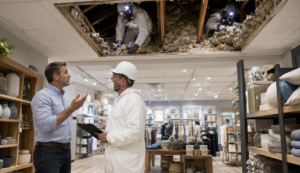
Old insulation often hides problems that retail owners do not see until they become serious. Moisture intrusion, roof leaks, condensation, pest activity, and attic ventilation issues can all affect insulation. Once insulation becomes wet or contaminated, it may no longer perform as intended. Worse, it can hold moisture against building materials and contribute to odors or damage.

Retail stores often have drop ceilings, storage areas, signage, lighting systems, HVAC ducts, and electrical components that make it easy for attic issues to go unnoticed. By the time a stain appears on the ceiling tile or an odor reaches the sales floor, the attic problem may have been developing for a long time.

Retail news coverage from Retail Dive often highlights how physical stores are changing, adapting, and competing for relevance. For brick-and-mortar stores, the condition of the building is part of the business strategy. A store cannot provide a strong in-person experience if the property itself is being neglected above the ceiling.

Addressing old insulation can also reveal hidden issues that need attention. During removal, professionals may discover evidence of pests, moisture, air leaks, or damaged materials. Finding those issues early can help store owners protect the building, reduce future repair costs, and maintain a cleaner environment.

Retail Stores Need Consistent Temperature Control

Many retail stores rely on consistent indoor temperatures not only for customer comfort, but also for product protection. Clothing, electronics, packaged goods, cosmetics, paper products, specialty foods, furniture, and other merchandise can be affected by heat, humidity, and poor indoor conditions. Even when products are not directly damaged, the shopping experience can suffer if certain sections of the store feel uncomfortable.

News and market reporting from Reuters Retail & Consumer shows how competitive and sensitive the retail sector can be. Retailers are constantly adjusting to consumer demand, pricing pressure, and operational challenges. Building performance should not be another hidden weakness.

When attic insulation is old or damaged, temperature control becomes harder. HVAC systems may struggle to keep up during peak weather. Employees may place fans behind counters, customers may avoid certain aisles, and energy bills may climb without a clear explanation. Replacing ineffective insulation can help create a more stable indoor environment, which supports both customer comfort and operational control.

Old Insulation Can Hurt the Store’s Professional Image

A retail store’s image is built through many small signals. Clean windows, organized displays, good lighting, fresh smells, comfortable temperatures, and well-maintained interiors all help customers feel confident about the business. On the other hand, musty odors, ceiling stains, uneven temperatures, and stale air can quietly send the wrong message.

Modern retail is highly competitive. Customers can shop online, visit another local store, or choose a national chain. Coverage from AP News on the retail industry reflects how often the retail landscape changes and how much attention is placed on consumer behavior, store strategy, and business performance. For local retail stores, the in-person experience is one of the strongest advantages they have.

That advantage weakens when the building feels neglected. A customer may not say, “This store needs new attic insulation.” Instead, they may think the store feels old, uncomfortable, dusty, or poorly managed. That impression can reduce trust. It can make the business feel less professional, even when the products and employees are excellent.

A cleaner, better-insulated attic supports the entire store environment. It helps the building feel more cared for, more efficient, and more comfortable.

When Removal and Replacement Makes More Sense Than Adding More Insulation

Some store owners may assume the solution is simply adding more insulation on top of what is already there. In some cases, that may help. In many cases, however, old insulation should be removed first. If insulation is contaminated, damp, pest-damaged, compressed, or uneven, covering it up does not solve the underlying problem.

Professional Attic Insulation Removal and Replacement allows the old material to be taken out so the attic can be properly evaluated and prepared for improved performance. This process can help remove contaminated insulation, identify problem areas, improve energy efficiency, and create a better foundation for new insulation.

For retail stores, this is especially important because business owners are not just maintaining a building. They are protecting a customer-facing space. The goal is not only to reduce energy waste, but also to support a cleaner, more comfortable, more professional shopping environment.

Better Building Performance Supports Better Retail Performance

Retailers are constantly looking for ways to improve revenue, reduce waste, and create a better customer experience. Industry insights from Deloitte’s retail outlook show that retail businesses are navigating operational change, customer expectations, and competitive pressure. While technology and marketing are important, the physical store still matters.

A retail store with better insulation can benefit in several ways. The HVAC system may operate more efficiently. Indoor temperatures may become more consistent. Customers may feel more comfortable. Employees may work in a better environment. Odors and attic-related contaminants may be reduced. The building may become easier to maintain.

These improvements may not be as visible as new signage or a redesigned display, but they support the foundation of the shopping experience. A store that feels better often performs better because customers are more willing to stay, browse, and return.

Conclusion

Old attic insulation is easy for retail store owners to ignore because it is hidden above the ceiling. But hidden does not mean harmless. Aging, contaminated, or ineffective insulation can increase energy costs, reduce comfort, affect indoor air quality, contribute to odors, hide moisture problems, and damage the overall customer experience.

Retail is a competitive business where every detail matters. Customers judge a store by how it looks, feels, smells, and functions. Employees perform better in a comfortable environment. Store owners benefit when operating costs are controlled and building problems are addressed before they become expensive.

For retail stores, old attic insulation is not just a maintenance concern. It is a business concern. Removing and replacing bad insulation can help protect the building, improve comfort, support customer confidence, and create a cleaner, more efficient space for both shoppers and staff. In a retail world where experience can influence sales, loyalty, and reputation, ignoring what is above the ceiling can cost far more than most store owners realize. 🛍️

Why Retail Property Owners Can’t Afford to Ignore Tree Hazard Assessment

Retail News for Tree Hazard Assessment

Retail properties are built around visibility, convenience, safety, and customer confidence. Every detail matters, from the parking lot layout to the storefront lighting to the landscaping that shapes the first impression. Trees can make a retail property feel welcoming, established, and attractive, but they can also become a serious liability when they are not properly evaluated. A beautiful tree near a storefront, walkway, sign, drive lane, or outdoor seating area can quickly become a safety concern if it has hidden decay, weak limbs, root damage, storm stress, or structural defects.

For retail property owners, property managers, shopping center operators, and facility teams, tree care is not just a landscaping issue. It is a risk management issue. A neglected tree can damage vehicles, block access, injure customers, disrupt tenants, hurt business operations, and create liability exposure. That is why a professional Tree Hazard Assessment should be treated as part of responsible retail property maintenance, not something to push aside until there is a visible problem.

Retail real estate continues to evolve as physical stores compete to provide better customer experiences, safer environments, and stronger property performance. According to ICSC, retail properties remain an important part of local commerce, community activity, and consumer engagement. When a property owner invests in the condition of the land, the buildings, and the outdoor environment, that investment supports both safety and long-term value.

Retail Properties Carry More Public Safety Responsibility

A retail property is different from a private residence because it is designed to invite the public onto the premises every day. Customers, employees, vendors, delivery drivers, tenants, maintenance crews, and nearby pedestrians may all move through the property. That level of public access creates a higher responsibility to identify hazards before they turn into incidents.

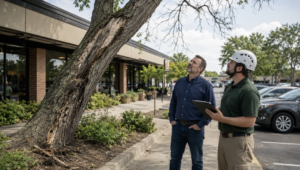
Trees near parking lots, storefront entrances, sidewalks, cart returns, outdoor dining areas, loading zones, and drive-thru lanes should never be ignored simply because they look healthy from a distance. A tree can appear green and full while still having internal decay, structural weakness, root instability, disease, or storm-related damage. These concerns may not be obvious to a property manager walking the grounds, but they can be recognized by a qualified tree professional trained to evaluate risk.

The broader definition of commercial property includes retail centers, restaurants, shopping centers, malls, and other public-facing properties, as explained by Wikipedia. These properties are not just buildings. They include land, parking areas, pedestrian spaces, landscaping, signage zones, drainage areas, and outdoor features that all work together to support the customer experience. Trees are part of that environment, and when they become unstable, they can affect the safety and function of the entire site.

For retail property owners, ignoring tree risk can lead to more than a fallen branch. It can result in emergency closures, blocked entrances, damaged storefronts, broken signs, tenant complaints, insurance claims, and loss of customer trust. A professional assessment helps identify the trees that need attention before a storm, high wind event, heavy rain, or hidden defect creates a larger problem.

Tree Hazards Can Interrupt Business Operations

Retail properties depend on steady access. Customers need to enter and exit safely. Delivery trucks need clear routes. Tenants need their storefronts visible and accessible. Emergency services need open lanes. When a large limb falls across a walkway or a tree fails near a drive lane, the disruption can affect more than one business.

A fallen tree can block parking spaces, damage vehicles, close off a storefront, interrupt foot traffic, or create a safety perimeter that discourages shoppers from entering. Even a partial closure can create frustration for tenants and customers. For a retail center with multiple businesses, one tree-related incident can ripple across the entire property.

Retail property performance is often measured by occupancy, foot traffic, tenant success, and customer experience. Reports such as CBRE’s U.S. Retail Real Estate Market Outlook highlight the importance of retail space availability, tenant demand, and property fundamentals. While market trends are important, day-to-day property conditions also matter. A clean, safe, well-maintained retail environment helps protect the value of the property and the businesses operating there.

Tree hazards are especially important around high-traffic areas. A weak limb above a main entrance, a leaning tree near a parking row, or root damage near pavement can become a direct threat to daily operations. A professional evaluation gives property owners a clearer understanding of which trees are stable, which trees need pruning, and which trees may require removal or further inspection.

Customer Trust Starts Before They Walk Through the Door

Customers begin judging a retail property before they ever enter a store. They notice whether the property feels clean, safe, organized, and cared for. Overgrown, damaged, or unstable trees can send the wrong message. Hanging limbs, cracked branches, deadwood, leaning trunks, or storm-damaged trees may make a property feel neglected.

Retail customers may not know the technical signs of tree risk, but they do recognize when something looks unsafe. A branch hanging over a sidewalk, a tree leaning toward a storefront, or a large dead limb above a parking space can create hesitation. That hesitation can affect how people feel about visiting the property, especially families, older customers, and anyone concerned about safety.

Retail news and commercial real estate reporting often focus on leasing, redevelopment, foot traffic, and consumer behavior, but the physical condition of a property plays a major role in all of those areas. JLL’s U.S. retail market insights show how closely retail performance is tied to market conditions, location quality, and property activity. A property that looks neglected outside can weaken the confidence tenants and customers have in the site.

Tree hazard assessments support the kind of property presentation that retail owners want. They help show that the owner is paying attention, acting responsibly, and investing in safety. That can matter for tenants who are choosing where to lease, customers deciding where to shop, and insurers reviewing risk.

Retail Landscaping Should Support Safety and Property Value

Trees can add tremendous value to retail properties when they are healthy and properly managed. They provide shade, soften large parking lots, improve curb appeal, create visual separation, and help make a shopping center feel more inviting. In many retail settings, mature trees can be part of what makes the property stand out.

However, the value of landscaping depends on proper maintenance. A mature tree that has not been evaluated can shift from asset to liability. Roots can disturb pavement, limbs can interfere with signage, canopies can block lighting, and weakened branches can threaten people or property. The goal is not to remove every tree that presents a concern. The goal is to understand the actual level of risk and make informed decisions.

Commercial real estate organizations such as the National Association of Realtors regularly discuss market insights, valuation, and trends that affect commercial property owners. While tree care may seem like a small piece of the larger property picture, it can contribute to the long-term condition, safety, and usability of the site.

A retail property with healthy, well-managed trees can look more polished and professional. It can also reduce avoidable emergencies. Preventive evaluation often costs less than emergency tree removal, storm cleanup, pavement repair, vehicle damage, tenant disruption, or injury-related liability. For owners managing multiple locations, the savings and risk reduction can become even more significant.

Storms Make Hidden Tree Problems More Dangerous

Retail properties are especially vulnerable during storms because they often include large parking areas, wide-open wind exposure, heavy pedestrian movement, and multiple structures close to trees. A storm does not need to be extreme to expose hidden weakness. High winds, saturated soil, lightning, and heavy rain can all increase the chance of limb failure or tree collapse.

A tree with internal decay may stand for years until strong weather pushes it past its limit. A tree with compromised roots may remain upright until the soil becomes saturated. A limb with a weak attachment point may appear stable until wind pressure causes it to break. These are the kinds of concerns a tree hazard assessment is designed to help identify.

The larger commercial real estate market continues to focus on resilience, property performance, and long-term planning. Cushman & Wakefield provides commercial real estate insights that often center on market strength, risk, and property strategy. For retail owners, resilience should include the outdoor parts of the property as well as the building itself.

Storm preparation should not begin when the forecast turns severe. Retail property owners should know which trees are most likely to cause problems before weather creates urgency. A proactive assessment gives owners time to plan pruning, removal, cabling, monitoring, or further inspection without the pressure of an emergency situation.

Tree Hazards Can Affect Insurance, Liability, and Tenant Relationships

When a tree-related incident happens on a retail property, the questions that follow can be difficult. Was the tree visibly damaged before it failed. Was maintenance documented. Did the owner know about the hazard. Was a qualified assessment completed. Were recommendations followed. These questions matter because they can affect insurance conversations, legal exposure, tenant concerns, and public perception.

Retail property owners do not need to wait for a claim to start thinking about documentation. A professional tree hazard assessment can create a record of responsible property management. It can show that the owner took steps to evaluate conditions, prioritize risks, and address concerns. This kind of documentation can be valuable when managing a property with heavy public use.

Tenants also want to know that the property owner is maintaining the site responsibly. A business leasing space in a retail center depends on safe access, visible signage, customer parking, and a professional exterior environment. When trees are neglected, tenants may feel that their business is being put at risk. When trees are managed well, it helps protect the relationship between property owners and tenants.

Commercial property owners often follow industry news through sources such as CoStar, which covers retail real estate activity, property transactions, leasing, and market movement. While large market trends matter, the practical condition of each property still plays a major role in how well that asset performs. A tree hazard assessment is one of the practical tools owners can use to reduce preventable risk.

Proactive Assessments Are Better Than Emergency Reactions

Emergency tree work is usually more stressful, more expensive, and more disruptive than planned maintenance. When a tree fails unexpectedly, property owners may have to deal with blocked access, damaged property, urgent cleanup, customer safety concerns, and unhappy tenants all at once. That is not the ideal time to make decisions.

Proactive assessment gives owners control. It allows them to prioritize work based on risk level, budget, tenant needs, and property use. A professional may recommend pruning, monitoring, soil or root evaluation, structural support, removal, or additional testing depending on the condition of the tree. The right recommendation depends on the tree, the target area, and the level of risk.

For retail properties, the “target area” is especially important. A tree in a low-traffic green space may not carry the same risk as a tree above a busy entrance, restaurant patio, parking row, or pedestrian walkway. A proper assessment considers not just the tree itself, but also what could be affected if part of the tree fails.

That is why retail property owners should think of tree hazard assessments as part of regular property planning. Just as roofs, lighting, pavement, drainage, signage, HVAC systems, and fire safety features need attention, trees also need professional evaluation. They are living structures, and their condition can change over time.

Conclusion

Retail property owners cannot afford to ignore tree hazard assessment because the risks touch nearly every part of property ownership. Safety, liability, tenant satisfaction, customer trust, curb appeal, storm readiness, insurance conversations, and long-term property value can all be affected by the condition of the trees on site.

A tree that looks beautiful today can become a serious concern if hidden defects go unnoticed. A large limb above a walkway, a leaning trunk near a storefront, or a weakened tree beside a parking lot can create problems that are costly, disruptive, and preventable. Retail properties welcome the public every day, and that makes proactive safety planning essential.

Tree hazard assessment is not just about trees. It is about protecting people, protecting businesses, protecting tenants, and protecting the investment behind the property. For retail owners who want safer, stronger, and more reliable properties, professional tree evaluation is a smart and responsible step.

Why Automotive Retail Businesses Benefit from Automotive Service Manager Training

Retail News for Automotive Service Manager training

Automotive retail businesses no longer compete on vehicle selection alone. A dealership is a retail operation that sells vehicles, but it also depends on after-sales service, repairs, parts, financing, and long-term customer relationships, which is reflected in Wikipedia’s overview of the car dealership model. Leaders who follow NADA Headlines see the same theme repeated across the industry: stores that stay healthy over time are the ones that treat service as a core part of the customer experience, not as a back-room function. That is why investing in Automotive Service Manager training is such a smart move for automotive retail businesses. It strengthens operations, improves consistency, raises customer confidence, and helps turn everyday service visits into long-term business value.

The timing matters. The retail automotive environment is demanding more discipline from stores and managers alike. Reuters autos and transportation coverage reported that U.S. vehicle sales were down 5.3% in the first quarter of 2026, while S&P Global Mobility’s automotive insights has pointed to affordability pressure and a softer sales outlook even as automakers push for retail growth. In a market like that, retail businesses cannot rely on front-end sales alone to carry the store. They need stronger fixed operations, cleaner customer retention, and better leadership in the service department. A well-trained service manager helps deliver all three.

Automotive Retail Runs on More Than Vehicle Sales

One of the biggest reasons automotive retail businesses benefit from service manager development is simple: the service department is not secondary to retail success. It is central to it. In NADA’s own dealership commentary, NADA’s dealership perspective on fixed operations states that service is the largest single influence on the public’s perception of a dealership, and that fixed ops remains the most profitable area of the store. The same piece notes that healthy dealerships should aim for service and parts profits that can cover overhead through fixed absorption. That means the service manager is not just supervising repairs. That person is helping protect the financial stability of the retail business itself.

That financial role becomes even more important when market conditions get tighter. Dealerships remain deeply tied to their local economies, and NADA says they have invested more than $200 billion in land, buildings, and infrastructure in their communities while supporting more than a million jobs nationwide. Retail stores with that kind of footprint need leaders who know how to protect margins without damaging trust. A trained service manager understands how labor utilization, repair order flow, technician productivity, parts coordination, and communication standards all connect to the bigger business picture. Instead of reacting to daily pressure, that manager leads with process, accountability, and clear priorities.

Training Helps Retail Businesses Hold On to Customers

Customer retention is one of the strongest arguments for training. According to Cox Automotive’s service-retention coverage, dealerships have lost 12% of service visits to competitors since 2018. Cox also noted that the average age of vehicles in the United States was trending to 12.8 years in 2025 and that dealers generated more than $156 billion in service and parts revenue in 2024. That combination tells a clear story. The demand for service is there, but loyalty is not guaranteed. Retail businesses do not benefit just because customers own cars longer. They benefit when those customers return to their store instead of drifting to an independent shop or another service option.

This is where training pays off in practical, visible ways. A strong service manager sets the tone for appointment flow, write-up quality, upsell ethics, advisor follow-through, estimate clarity, and status communication. Those details shape how customers feel about the business. When service feels organized, honest, and efficient, customers are more likely to return, approve recommended work, and speak well of the store. When service feels confusing or inconsistent, the retail business loses more than one repair order. It loses trust, repeat visits, and future sales opportunities. Training gives managers the tools to tighten those weak points before they become permanent revenue leaks.

Training Strengthens the Customer Experience

Customer experience is now one of the clearest dividing lines in automotive retail, and service managers sit right in the middle of it. In J.D. Power’s 2026 U.S. Customer Service Index Study, overall satisfaction with dealer service improved, but the study also found that dealer maintenance visits still take significantly longer than comparable aftermarket visits. J.D. Power further reported that when satisfaction is high, customers are far more likely to return to the dealer for paid service and more likely to buy another vehicle from the same brand. That means service is not just about fixing cars correctly. It is about protecting brand loyalty, future revenue, and the customer’s next purchase decision.

Training helps managers translate that reality into daily action. A trained leader is more likely to improve the moments that matter most: accurate expectations at check-in, faster communication during the visit, clearer explanations at delivery, more consistent advisor performance, and cleaner documentation of the work performed. J.D. Power specifically highlighted the importance of keeping customers informed and explaining the work completed, and those are management disciplines as much as they are advisor habits. When a service manager knows how to coach to those standards, the retail store becomes easier to trust. That trust feeds reviews, referrals, retention, and a better public reputation.

Modern expectations have also changed what “good service” looks like. J.D. Power found that customers coming from direct-to-consumer brands often arrive with higher expectations for convenience, including mobile or valet-style service options. At the same time, aftermarket competitors keep winning on speed and simplicity. Automotive retail businesses cannot answer that pressure with guesswork. They need service managers who can adapt scheduling, staffing, workflow, communication, and pickup processes to match a more convenience-driven customer mindset. Training helps managers think beyond the old service desk model and lead the department in a way that feels current, responsive, and competitive.

Training Builds Better Leaders, Not Just Better Schedules

Another major benefit is internal leadership. A service department can have talented technicians and still underperform if the manager is weak. NADA’s dealership fundamentals training notes that dealership decisions affect the store’s financial statements and specifically calls out absorption, labor rates, technician proficiency, and service operations as critical concepts for managers to understand. In other words, the service manager is not merely a scheduler. That role touches profitability, staffing health, reconditioning flow, certification standards, and the overall pace of the business. Training helps managers understand the store as a system, not just a shop floor.

That broader view matters even more as the retail mix changes. S&P Global Mobility has reported that hybrid inventory has risen, EV inventory has stabilized, and a wave of off-lease EVs is beginning to reshape the market. S&P also noted that dealers who use smart CRM and lease insights can retain more customers and grow market share as those vehicles come back into the market. Service managers need enough product knowledge and operational awareness to support customers through those transitions. Different powertrains, different maintenance expectations, different ownership patterns, and different return cycles all affect the service lane. Training helps managers stay prepared instead of getting left behind by the pace of change.

Well-trained managers also improve employee stability. Advisors work better when expectations are clear. Technicians perform better when dispatch is fair, estimates are cleaner, and comebacks are addressed properly. Parts coordination improves when communication is disciplined instead of rushed. That kind of environment reduces friction inside the department, which customers can feel even if they never see the internal process. A retail business that trains its service managers is really investing in stronger culture, better execution, and a more dependable customer-facing team. Those benefits compound over time.

Conclusion

Automotive retail businesses benefit from Automotive Service Manager Training because the service department is one of the strongest drivers of trust, retention, reputation, and long-term profitability in the entire store. The latest industry reporting from NADA, Cox Automotive, J.D. Power, S&P Global Mobility, Reuters, and other established sources points in the same direction: retail automotive is under pressure to operate smarter, keep customers longer, and deliver a service experience that feels organized, valuable, and worth coming back for. When a business develops stronger service managers, it strengthens the part of the dealership that customers experience again and again. That is not a minor operational upgrade. It is a retail growth strategy built on better leadership, better customer care, and a more durable business.

Why a Palm Beach, FL Retail Store Should Hire a Concrete Staining Palm Beach Business

Retail News for Concrete Staining Palm Beach

Palm Beach retail is not standing still. The county’s retail market has shown strong leasing activity and positive absorption, West Palm Beach continues to see destination-style development, and the broader visitor economy is helping drive more foot traffic into shopping corridors across the region. In a market like this, a retail store cannot afford to look worn down, outdated, or forgettable. A polished storefront and an attractive interior are not just aesthetic upgrades. They are business assets. Local retailers compete for attention every day, and one of the most overlooked ways to improve the customer experience is through the floor beneath every shopper’s feet. Palm Beach stores that hire a Concrete Staining Palm Beach business gain a finish that looks refined, performs well under heavy use, and supports the kind of image modern retail needs in a fast-moving local market.

Palm Beach Retail Is Fueled by Presentation and Experience

Retail success in Palm Beach is tied to more than inventory. It is tied to presentation, atmosphere, and the impression a store creates the second someone walks in. Palm Beach County is one of Florida’s largest and most economically significant counties, and its mix of affluent residents, visitors, and year-round commercial activity creates a setting where appearance matters. A retailer is not only selling products. It is selling confidence, trust, comfort, and brand identity. When flooring looks dull, chipped, stained in the wrong way, or neglected, that visual message weakens the entire store. By contrast, professionally stained concrete helps create a cleaner, more intentional environment that feels current and cared for. That matters in a county where growth, tourism, and commercial investment continue to shape consumer expectations. For local context, retailers can watch county and destination trends through sources such as Palm Beach County, Florida on Wikipedia and Discover The Palm Beaches.

Concrete Staining Gives Retail Stores a More Upscale Look Without Starting Over

One reason a retail store would hire a Concrete Staining Palm Beach business is value. Full flooring replacement can be disruptive, expensive, and time-consuming. Concrete staining allows a store to upgrade the look of existing concrete without the same level of demolition, haul-away, and rebuild costs that often come with other flooring systems. For many retailers, that means they can improve the appearance of their space while keeping more capital available for inventory, staffing, merchandising, and marketing.

Just as important, stained concrete can be tailored to fit the store’s identity. A boutique may want a warm, polished finish that feels elegant and coastal. A lifestyle store may want a richer, earth-toned floor that feels grounded and high-end. A sneaker shop or modern apparel store may want a sharper, more contemporary look with clean lines and a sleek sheen. When the staining work is done by a qualified local business, the floor becomes part of the brand experience instead of just a surface people walk on. That ability to transform ordinary concrete into a more refined retail feature is a major reason Palm Beach stores benefit from hiring a local specialist rather than trying to cover the floor with a temporary solution.

Retail Traffic Demands Flooring That Can Handle Wear

Palm Beach retailers deal with steady foot traffic, rolling racks, delivery movement, cleaning equipment, and the day-to-day friction of a commercial environment. A floor that looks good for a month but fails under pressure is not a smart investment. Stained concrete stands out because it can be both attractive and practical. When installed and sealed properly, it offers durability that makes sense for stores that need a reliable finish in high-use areas.

That matters even more in a county where the retail market has remained active. Current market reporting has pointed to strong tenant demand and improving retail fundamentals in Palm Beach County, which means stores are operating in a competitive landscape where commercial spaces need to perform well visually and physically. Resources like the Colliers Palm Beach County Retail Market Report and Cushman & Wakefield Palm Beach MarketBeat show why retailers should think long-term about property presentation and upkeep. A concrete staining company helps turn the floor into a durable asset that supports business instead of becoming a maintenance headache.

Palm Beach Stores Need Finishes That Support Cleanliness and Maintenance

Retail stores have to stay clean. Dust, tracked-in sand, rainwater, spills, and daily wear can quickly make certain flooring materials look tired. Palm Beach’s coastal conditions make that even more important. A retail store needs a floor that can be cleaned efficiently and maintained without constant patchwork. Stained concrete offers a practical advantage because it does not carry the same issues as some flooring materials that trap debris, peel, fray, or require frequent replacement.

A professionally stained and sealed concrete floor can simplify routine upkeep and help the store maintain a cleaner appearance between major cleanings. That cleaner look supports brand trust. Customers notice whether a store feels orderly and well-kept. Even when they do not consciously think about the flooring, they are still responding to the visual cues it creates. In retail, those cues influence how people feel about quality, pricing, professionalism, and whether the business appears established. A Concrete Staining Palm Beach business understands the local environment and can recommend finishes that fit both the design goals and the maintenance realities of a retail setting.

Store Design Affects Customer Confidence

A retail store’s environment communicates before the staff ever speaks. Floors play a bigger role in that than many owners realize. When a customer walks into a space with attractive, well-finished concrete, the store often feels more intentional, more premium, and more trustworthy. That perception matters in Palm Beach, where shopping is closely tied to hospitality, lifestyle, and visitor experience.

The Palm Beaches recently surpassed 10 million visitors for the first time, and West Palm Beach has continued attracting attention as a destination with shopping, dining, and entertainment appeal. That means more eyes on local businesses and more opportunities for stores to either impress or disappoint. Retailers operating near active corridors, mixed-use districts, or visitor-driven areas need every visual advantage they can get. Helpful local indicators can be followed through pieces like The Palm Beaches Surpass 10 Million Visitors for the First Time and West Palm Beach Wins #1 Ranking in 2025 Tripadvisor Travelers’ Choice Best of the Best Trending Destination Award. In this kind of market, stained concrete helps a retail store look ready for both local shoppers and destination traffic.

Concrete Staining Helps Retailers Match Palm Beach’s Ongoing Development

Palm Beach County continues to evolve, and development patterns matter to retailers. New mixed-use projects, redevelopment efforts, and commercial investment raise the visual standard in the surrounding market. When one district improves, nearby businesses feel the pressure to keep up. A store with dated floors can begin to look behind the market even if its products are excellent.

That is one reason stained concrete is a smart move. It allows an existing store to modernize without needing a full buildout. In areas seeing reinvestment and destination-style placemaking, floor appearance becomes part of remaining competitive. The progress in places like the NORA District is one example of how the urban core is being reshaped with stronger emphasis on lifestyle, design, and experience. Retailers tracking local change can review updates such as From Rail Line to City Landmark: NORA District Phase 1 and broader development resources like Palm Beach County Permit Activity Reports. A Concrete Staining Palm Beach business helps retail owners refresh their space in a way that aligns with the direction of the local market.

A Better Floor Supports Brand Identity and Merchandising

Retail is visual by nature. Merchandise displays, signage, lighting, and seasonal layouts all perform better when the foundation beneath them supports the look instead of fighting it. Stained concrete gives stores a cleaner backdrop that can make products stand out more effectively. It helps shelving look more intentional. It helps color palettes make sense. It helps the store feel cohesive.

This becomes especially important for retailers that want stronger photography, better social media visuals, or a more polished in-store experience. Customers photograph spaces. They share shopping moments. They decide whether a store feels current enough to revisit. A good stained concrete floor can quietly improve every one of those touchpoints. It is not only about what the customer sees when standing still. It is about how the whole environment feels as they move through the store.

Hiring a Local Concrete Staining Palm Beach Business Brings Better Results

Not every contractor understands retail, and not every flooring company understands Palm Beach. A local concrete staining business brings practical knowledge of the area’s climate, commercial expectations, design preferences, and business realities. That local familiarity matters. Palm Beach retail stores need solutions that fit local conditions and customer standards, not generic recommendations pulled from a national template.

A local company can also better assess the existing slab, recommend the right stain and sealer system, and prepare the surface correctly so the final result has both visual appeal and long-term performance. That preparation stage is where many flooring problems begin or are prevented. Retailers should want a team that knows how to deliver a finish that looks consistent, fits the brand, and holds up over time. In a business environment supported by a large and diverse local economy, quality property decisions matter. Even broader county financial analysis points to Palm Beach County’s economic depth and continued momentum, as reflected in documents like Moody’s October 2025 Palm Beach County credit opinion. That kind of economic strength supports a commercial market where quality presentation is worth investing in.

Conclusion

A Palm Beach, FL retail store needs more than merchandise and a good location to stay competitive. It needs an environment that supports trust, reflects quality, and keeps pace with a market shaped by growth, tourism, redevelopment, and rising customer expectations. Hiring a Concrete Staining Palm Beach business gives a retailer a way to upgrade appearance, improve durability, simplify maintenance, and create a stronger in-store experience without the disruption of a full flooring replacement. In a county where retail activity remains strong and presentation influences perception every day, stained concrete is not a minor cosmetic upgrade. It is a smart business decision that helps the store look established, feel current, and compete with more confidence.

The Seventh Psalm: A High-Impact New Mystery Novel Retailers Can Sell With Confidence 📚🛍️

Retail News for best new mystery books

Mystery readers walk into stores looking for a specific feeling: tension they can trust, a lead character they can follow, and a story that keeps tightening its grip until the final page. Retail buyers look for something just as specific: a book with a clean hook, strong hand-sell potential, and shelf presence that turns browsers into buyers. The Seventh Psalm by Matthew Pearce delivers on both sides of that equation, which is why it belongs in the conversation as one of the best new mystery books for retail outlets right now.

At its core, this is a modern, high-concept mystery with a crisp premise that reads like a staff-pick pitch in one breath. A string of ritualistic murders strikes New York City, staged with “theological precision,” and the NYPD turns to Dr. Mathias Green, a former divinity scholar turned criminal profiler, to decode what the killer is communicating through scripture, symbolism, and blood. Mathias is haunted, sharp, and pulled into an escalating case where doctrine becomes a weapon and the killer’s message starts to mirror Mathias’s own past teachings.

A Retail-Ready Premise That Communicates Fast

Retail success starts with clarity. Customers decide in seconds whether a book feels like their kind of story, and the strongest titles make that decision easy. The Seventh Psalm communicates quickly because the hook is instantly legible: a profiler with theological expertise hunts a killer turning scripture into staged murder scenes in New York City.

That hook creates multiple entry points for multiple types of shoppers. Traditional mystery readers get the structured investigation, escalating stakes, and pattern-driven puzzle. Thriller-leaning readers get urgency and a dangerous adversary. Readers drawn to psychological tension get a protagonist with a mind he does not fully trust and a past he refuses to open.

For retail teams, that range matters. It increases the size of the “yes” audience without diluting the brand of the book. It also makes the hand-sell natural. Staff can describe it cleanly to a customer without overexplaining, and customers can repeat the premise to friends without losing the thread.

A Setting and Tone That Match What Mystery Shoppers Buy

New York City remains one of the most reliable backdrops in commercial mystery because it signals scale, complexity, and shadowed institutions. The Seventh Psalm leans into that energy while keeping the investigation grounded in character. Mathias is not positioned as a superhero. He is positioned as a specialist with scars, pulled into a case that forces him into both the city’s underworld and his own.

That tone fits what mystery readers routinely reward: a smart, capable lead who pays a personal price for the truth. It also supports the kind of browsing behavior retailers want. Shoppers gravitate toward books that feel “serious” and “addictive” at the same time, and theological symbolism adds a distinctive flavor without pushing the novel into niche territory.

A Cast Built for Series Momentum and Repeat Purchasing

Retailers benefit when a new title has room to grow. Series momentum drives repeat purchasing, staff familiarity, and steady reorders. The Seventh Psalm introduces a team dynamic that supports that momentum: Mathias Green as the specialist profiler, Captain Julia Halpern as the no-nonsense NYPD anchor, and tech analyst Lennox Rivera as the modern investigative edge.

That trio is retail-friendly because it creates continuity. It also creates easy reader attachment. Customers who like one character tend to come back for the next installment, and retailers tend to see better sell-through when readers feel like they are returning to a cast they already trust.

Why This Title Fits the Retail Moment

Retail is operating in a climate where attention is expensive and shelf space must prove itself. Industry coverage continues to spotlight how quickly consumer behavior shifts across formats and channels, and retailers increasingly win by curating experiences instead of simply stocking inventory. Publications that track these shifts, including Retail Dive, regularly emphasize how merchandising, personalization, and strong storytelling around products influence performance.

Books remain one of the cleanest “discovery” categories in-store because they invite browsing. A mystery novel with a sharp premise functions like a high-performing impulse product with deeper satisfaction. The Seventh Psalm supports that because it has a clear identity and a compelling promise: a puzzle-driven hunt with spiritual symbolism and a haunted lead.

Retail coverage also keeps highlighting how major players invest in both physical presence and experience as they compete for shoppers. Reuters’ ongoing retail and consumer reporting captures this constant push-and-pull between ecommerce convenience and in-store engagement. Reuters’ Retail & Consumer coverage reflects that reality daily, and it reinforces a key point for book retail: the store wins when the product creates a moment.

A mystery novel that can be hand-sold in ten seconds creates that moment.

Merchandising Strength: Where It Displays Well and Why It Moves

The Seventh Psalm is especially easy to place because it can live in multiple retail micro-destinations without confusing the customer:

  • Front table “New & Notable” mystery/thriller sets

  • Staff picks with short, punchy shelf talkers

  • True crime adjacent displays for readers who like investigative intensity

  • Urban noir and psychological suspense cross-shelving

Retailers who follow industry best practices for category planning often rely on trends and shopper patterns surfaced by trade groups and outlets that track retail performance. The National Retail Federation consistently publishes retail-focused insights, and its news ecosystem is one of the most widely referenced hubs in the industry.

For stores that want a clean way to keep staff aware of bigger retail shifts while executing day-to-day merchandising, NRF’s newsletter hub, NRF Retail Newsletters, is a practical reference point.

On the bookstore side, the principle stays the same: a title that is easy to summarize and easy to display tends to earn better conversion from browsers.

Authority, Credibility, and the “Explain-It-to-a-Friend” Factor

Retailers sell confidence. Customers buy what feels assured. The Seventh Psalm reads like a book that knows what it is doing: it promises theological precision, delivers a defined adversary in Psalmist13, and frames the narrative stakes around both the case and Mathias’s past.

That clarity helps staff recommend it with conviction, and it helps customers feel safe buying it as a gift. In the modern retail landscape, gifting behavior remains a major driver for discretionary categories. Retail news outlets and market trackers emphasize the ongoing importance of seasonal moments and curated gifting, which is one reason a mystery novel that looks and sounds giftable remains a reliable bet.

For broader retail context and ongoing industry reporting that supports smarter buying decisions, Chain Store Age is another established source retailers use to keep a pulse on trends and store strategy.

Positioning Notes Retail Buyers Can Use Immediately

Retail teams can position The Seventh Psalm with language that converts without overcomplicating:

  • “A New York City murder case decoded through scripture and symbolism.”

  • “A former divinity scholar turned profiler hunts a killer staging murders like a twisted sermon.”

  • “Psychological suspense with an investigative core and a sharp theological hook.”

This kind of positioning aligns with how shoppers browse and how staff hand-sell. It also aligns with the way retail decision-makers evaluate product-market fit across categories, a topic frequently covered in business and retail reporting like The Wall Street Journal’s retail coverage.

For a baseline definition of what retail is and how retail environments drive purchase behavior through merchandising and presentation, even a simple reference like Wikipedia’s entry on Retail is useful for grounding the mechanics behind why books like this convert well on tables and endcaps.

Conclusion

The Seventh Psalm earns its place as one of the best new mystery books for retail outlets because it checks the boxes that matter most: a premise that sells fast, a tone that matches proven reader demand, a cast built for series momentum, and a distinctive theological edge that makes it stand out without making it hard to recommend.

For retailers who want the best new mystery books with strong hand-sell potential and clear display value, the book’s official page, The Seventh Psalm, provides the clean synopsis and positioning needed to support merchandising and staff training.

Retail Stores and Plastic Pallets: The Quiet Partnership That Keeps Shelves Full 📦✨

Retail News for Plastic Pallet Company

Retail looks simple from the front of the store. Products arrive, shelves stay stocked, customers buy, and the day moves on. Behind that smooth experience is a nonstop flow of inventory that has to be handled, staged, counted, moved, stored, and replenished with speed and accuracy. When that flow gets choppy, the store pays for it fast through damaged goods, late replenishment, messy backrooms, safety incidents, out-of-stocks, and labor that gets burned up doing the same work twice.

That is why retail stores benefit from working with a Plastic Pallet Company. Pallets are not just shipping platforms. They are a repeat-use asset that touches nearly every part of modern retail operations, from distribution to reverse logistics. Partnering with the right plastic pallet provider helps retailers protect product, stabilize replenishment, improve hygiene, cut downtime, support automation, and build a cleaner, more predictable supply chain.

Retail is a supply chain business, even when it feels like a people business

Retail performance is tied to how well inventory moves. Sales depend on availability, assortment, speed-to-shelf, and keeping costs under control while expectations keep climbing. Official retail sales releases underscore how closely retail outcomes track broader operational realities like inventory flow and fulfillment pressure, not just marketing and merchandising (Monthly Retail Trade – Sales Report).

Pallets sit at the center of that movement because they shape how product is unitized, stored, transported, and staged. A strong plastic pallet partner helps a retailer treat pallets as a managed system rather than a pile of mismatched wood platforms that create friction and waste.

Plastic pallets bring consistency, and consistency is where retail wins

Retail operations run on standardization. Store plans are standardized, shelf sets are standardized, delivery windows are standardized, and labor schedules are standardized. Pallets should be, too.

Plastic pallets offer a consistent footprint and predictable performance across loads, lanes, and seasons. That consistency matters because it reduces the “surprise costs” that show up when pallets vary in quality: leaning stacks, crushed corners, broken boards, and unstable loads that slow down receiving and create product damage. A plastic pallet company can supply a consistent pallet spec across locations, align pallet selection to load profiles, and keep performance uniform across the network.

That uniformity also supports the broader push toward stronger supply chain execution in retail operations coverage and industry reporting (Retail Dive).

Cleaner handling supports cleaner stores and cleaner product movement 🧼

Retailers handle a huge mix of goods, and hygiene is a real operational concern, especially in grocery-adjacent categories, health and beauty, pet, baby, and any product that sits close to consumables. Plastic pallets are easier to clean and sanitize than wood and do not shed splinters or absorb odors the same way.

For stores, this translates to cleaner backrooms, fewer contamination concerns, and less time spent managing messy pallets. It also supports a more disciplined receiving process, where the pallet is not the weak link that introduces dust, debris, or broken wood into product handling zones.

For foundational context on pallets and how they function as a logistics unit, see the overview of pallets as a handling platform (Pallet – Wikipedia).

Fewer damages, fewer incidents, fewer hidden costs

Retail profit is often lost in small amounts, repeatedly. A dented case here, a crushed box there, a broken shrink wrap corner that becomes unsellable after being scuffed in transit or in the backroom. Pallet quality influences all of that.

Plastic pallets reduce common damage triggers:

  • No protruding nails that tear packaging

  • No splintered boards that snag stretch wrap

  • More predictable load stability during handling

  • Better stacking behavior and less pallet “flex” variability when matched correctly to the load

A plastic pallet company can help retailers match pallet design to actual retail use cases such as mixed-SKU store replenishment loads, display-ready pallets, or high-velocity cross-dock movement.

Better fit for modern retail distribution and store replenishment

Retail distribution is not simply bulk movement. It is rapid sorting, store-specific allocation, and frequent handling that prioritizes speed and accuracy. Retail distribution requires breaking down freight, building store-friendly shipments, and moving product through facilities with minimal dwell time. Industry explainers on retail distribution highlight how the work centers on receiving, breaking down pallets, picking, packing, and route-based shipping (Retail Distribution – Logistics Bureau).

Plastic pallets support that environment by reducing the friction points that slow down handling. When inbound pallets are more uniform and reliable, lift operators and receiving teams move faster, loads stay stable, and exceptions decrease.

A plastic pallet company strengthens reverse logistics and returns flows ♻️

Returns are no longer a side task. They are a major operational stream that affects labor, space, customer satisfaction, and margin. Reverse logistics also includes moving unsold seasonal inventory, recalls, recycling, and inter-store transfers.

Plastic pallet programs fit naturally into reverse logistics because they are built for repeated use and closed-loop management. Many pallet companies offer pooling, retrieval, tracking, refurbishment, and lifecycle management services that align with the way retailers increasingly treat returns and circularity as a profit-protection strategy.

Retail-focused thought leadership has been emphasizing reverse logistics as a lever for value recapture and resilience (Beyond retail: The hidden reach of reverse logistics – NRF).

Supports automation, tracking, and the next generation of inventory accuracy

Retailers are investing in better visibility and faster decision-making. That includes scanning, RFID programs, sensor-enabled tracking, and warehouse automation that depends on predictable, machine-friendly load units. Plastic pallets support these investments because they are dimensionally stable and often more compatible with automated systems than inconsistent wood pallets.

A managed relationship with a plastic pallet company makes it easier to standardize pallet types across facilities and stores, which supports smoother automation and fewer jams, misreads, and handling exceptions.

Sustainability improves when pallets are managed as reusable assets

Retailers are under pressure from customers, regulators, and internal cost targets to reduce waste and operate more responsibly. Pallets may not be customer-facing, but they are part of the retailer’s physical footprint. A plastic pallet program can reduce the churn of single-use pallets, improve asset recovery, and support more predictable end-of-life recycling pathways when the pallet provider manages lifecycle planning.

Retail sustainability discussions increasingly point toward circular systems that reduce waste through reuse and reverse logistics (Circularity is redefining supply chains – NRF).

This is not about chasing a trend. It is about cutting the recurring inefficiencies that show up when pallets are treated as disposable.

Reliability matters when supply chains are already under pressure

Even when demand is steady, retail supply chains deal with volatility: disruptions, labor constraints, transportation pinch points, and sudden shifts in buying. That is why retailers keep focusing on resilience and preparedness.

Retail industry organizations continue to emphasize the need for stronger supply chain infrastructure and coordinated planning across the retail ecosystem (Supply Chain Infrastructure – NRF). A pallet program is one of those practical, operational decisions that improves resilience because it reduces preventable problems at the exact points where inventory changes hands.

What a strong plastic pallet partnership actually looks like in retail

Working with a plastic pallet company is not just buying pallets. The best partnerships feel like an operational system with clear rules and support. In practice, retailers benefit most when the pallet company provides:

  • A standardized pallet spec aligned to retail load profiles

  • A replenishment model that keeps stores and DCs supplied without chaos

  • Asset management such as pooling, tracking, retrieval, repair, and reporting

  • Sanitation and quality controls that match category needs

  • End-of-life planning for recycling and responsible disposal

  • Network-level consistency so stores do not become the “dumping ground” for bad pallets

This kind of structure directly supports the retail supply chain priorities leaders have been outlining in industry coverage (What the retail supply chain will look like in 2025 – NRF).

Conclusion: Plastic pallets help retail run smoother, safer, and more predictably ✅

Retail success is built on execution. Clean receiving, fast replenishment, safe backrooms, protected product, and reliable reverse logistics are not glamorous, but they create the shopping experience customers expect. Plastic pallets, managed through a dedicated Plastic Pallet Company, bring consistency where retail needs it most: the daily movement of goods that keeps shelves full and operations calm.

When pallets are treated as a managed, reusable asset instead of a disposable afterthought, retailers reduce damage, improve hygiene, support modern tracking and automation, and build a more resilient supply chain that performs better through every season.

Built on Solid Ground: Why Retail Stores Need a Soil Report Before They Build 🏬🧱

Retail News for Soil Report Near Me

Opening a retail store is exciting. The brand is ready, the location looks perfect, and the spreadsheets say the numbers work. But there’s one part of the project that can quietly decide whether the build stays on budget, passes inspection smoothly, and avoids expensive surprises after opening day: the soil under the site.

A Soil Report (often called a geotechnical report) is the “truth-teller” for what’s happening below grade. It helps architects, engineers, developers, and owners design the building and sitework based on real conditions—not assumptions. In retail, where timelines are tight and every delay can mean lost revenue, that clarity matters.

For context on the industry side of things, retail continues to invest in new formats, remodels, and store expansion, which keeps site readiness and construction risk front and center for growth-minded brands. Sources that regularly cover those retail moves include National Retail Federation (NRF), Retail Dive, Chain Store Age, Retail TouchPoints, ICSC Exchange, and Retail Week. For a baseline definition of the retail category itself, Retail (Wikipedia) is a simple reference point.

A Soil Report protects the retail budget from “invisible” costs 💸

Retail builds have a way of looking straightforward on the surface: slab, walls, roof, parking, utilities, signage. The issue is that soil conditions can force expensive changes after the project is already underway—when change orders cost the most.

A geotechnical investigation identifies things like low bearing capacity soils, compressible layers, expansive clays, high groundwater, undocumented fill, and risk of settlement. These are the kinds of issues that can require thicker slabs, deeper foundations, over-excavation and replacement, lime/cement stabilization, geogrid reinforcement, or drainage redesign. When those decisions happen late, the budget takes a hit. When they happen early—based on a Soil Report—the team can price it accurately and choose the most cost-effective solution.

Soil-related movement is especially dangerous for retail because it shows up where customers notice it: cracked tile, uneven floors, stuck doors, drywall cracks, and warped storefront systems. Preventing those outcomes starts with knowing what the soil will do under the building’s load. ICC Digital Codes+1

It supports code compliance and smoother permitting ✅

Many jurisdictions require a geotechnical report for certain site conditions, building sizes, or foundation types—and building officials often expect the report to inform the foundation and earthwork design. The International Building Code’s Chapter 18 covers soils and foundations and includes reporting requirements when a geotechnical investigation is required. ICC Digital Codes+1

For retail owners and developers, this matters because permitting speed affects opening dates. A complete Soil Report helps reduce back-and-forth during plan review, supports the structural engineer’s foundation design, and provides clear criteria for compaction, fill placement, and site preparation. In practical terms, it’s one of the best ways to keep approvals, inspections, and construction moving in the right order.

Retail floors demand performance, and soil drives slab success 🧱

Retail stores live and die by the customer experience. That includes the feel of the space—flat floors, clean finishes, aligned shelving, smooth transitions between departments, and doors that operate properly every day.

Soil reports guide slab design and subgrade preparation to reduce cracking and differential settlement. They also inform how to handle moisture and groundwater conditions that can migrate into the slab system. This is particularly important for retailers installing large-format tile, polished concrete, specialty coatings, or sensitive floor finishes where curling and moisture vapor transmission can become a costly problem.

The Soil Report becomes the “rules of the road” for earthwork: how much to proof-roll, what to remove, what to replace, how to compact, and what densities and moisture ranges to hit. Those details directly influence whether the slab behaves like the design assumed it would. ASTM International | ASTM+1

It reduces schedule risk, which protects opening day 📅

Retail projects often run on aggressive timelines. Lease milestones, seasonal sales cycles, staffing plans, and merchandising schedules are all tied to the opening date. Soil surprises can wreck that calendar.

A Soil Report reduces the odds of discovering bad fill, unsuitable soils, or high groundwater after excavation begins. It also helps the team select the right foundation system upfront, rather than redesigning midstream. Even when challenging soil conditions exist, knowing early allows procurement and sequencing to adjust—bringing specialty trades in at the right time and preventing long stoppages.

In the retail world, where stores are frequently opening, renovating, and reformatting locations, development coverage often highlights how timing and execution make the difference between a smooth rollout and a costly delay. Planning the ground conditions is part of that execution discipline. chainstoreage.com+1

Drainage, stormwater, and flood risk start in the ground 🌧️

Retail sites come with large paved areas: parking lots, drive aisles, loading zones, dumpster enclosures, and sometimes outparcels. Water management is a major factor—both for compliance and long-term maintenance.

Soil infiltration characteristics affect stormwater plans, retention/detention performance, and the stability of pavements and subgrades. High groundwater or poor drainage soils can increase the risk of pumping during excavation, subgrade softening, and premature pavement distress.

In flood-prone regions, the relationship between the building foundation and surrounding grade is especially important. FEMA’s flood-related guidance and technical bulletins emphasize design considerations that relate to foundations, drainage, and reducing flood damage. Those considerations tie directly back to site conditions, groundwater behavior, and how the building interacts with the soil. FEMA+2FEMA+2

It helps protect the brand from long-term building and pavement problems 🚗

Retail isn’t just a building. It’s also everything outside: parking, loading, sidewalks, curb ramps, cart corrals, and delivery routes. Weak subgrade conditions can cause settlement in pavements and flatwork, leading to ponding water, cracked sidewalks, trip hazards, and customer complaints.

A Soil Report helps civil engineers design pavement sections appropriate for real traffic loads—especially for stores with frequent delivery trucks, heavy dumpsters, or high-turnover parking. It also helps identify areas where pavement subgrades will require stabilization or undercut to avoid failures later.

From an operations standpoint, these issues become repeat expenses: patching asphalt, re-leveling sidewalks, re-striping after repairs, and managing liability risk. Spending money on the soil report up front is often cheaper than paying for years of reactive repairs after the store opens.

Lenders, insurers, and stakeholders expect real risk management 🧾

Retail developments often involve lenders, investors, landlords, and national brand stakeholders. Those groups want fewer unknowns—especially unknowns that can create structural risk, cost overruns, or schedule blowups.

A Soil Report shows that the project team investigated subsurface conditions professionally and designed the foundation and sitework based on evidence. It also helps document that construction followed appropriate geotechnical standards and reporting practices. ASTM publishes geotechnical engineering standards that support investigation, testing, and documentation expectations across the industry. ASTM International | ASTM+1

This is part of what separates a “hope it works” build from a professionally managed project that scales across multiple store locations.

It improves decision-making for site selection and expansion 🌍

Retail growth depends on picking sites that can be built efficiently. Two parcels can look identical from the street and have completely different subsurface conditions. One might be clean native soils with great bearing capacity. Another might be uncontrolled fill, compressible layers, or high groundwater that adds significant cost.

When retailers are expanding—whether through ground-up builds, new formats, or adaptive reuse—soil and subsurface conditions can make a “great deal” turn into an expensive problem. Early geotechnical work supports smarter site selection and better forecasting, especially when a brand is rolling out multiple locations and needs predictable build costs.

Conclusion: Strong retail starts below grade 🧱✨

A Soil Report near me is not paperwork for paperwork’s sake. It is one of the clearest ways a retail store owner or developer can protect the budget, defend the schedule, support code compliance, and prevent long-term performance issues that damage the customer experience.

Retail is competitive. Openings matter. Remodels matter. Brand consistency matters. A store that looks flawless on day one but fights cracking floors, drainage issues, or settlement a year later is paying for what it didn’t learn early enough.

Build the store you want customers to remember—by starting with the ground it stands on. ✅🏬

Why Smart Retailers Choose General Electric Breakers for Safer, More Profitable Stores 🛍️⚡

Retail News for general electric breakers

Retail runs on power—literally. From dazzling lighting that draws shoppers in, to point-of-sale (POS) terminals, refrigeration, HVAC, security cameras, and increasingly dense back-of-house tech, a store’s electricity is its lifeline. One silent component determines whether all of that stays dependable and safe: the circuit breaker. For many retailers, choosing General Electric (GE) breakers is a practical, long-term decision that protects people, preserves uptime, and keeps margins healthy.

The Business Case: Power Reliability Is Retail Revenue

Every minute a store is dark or a register is down is a minute of lost sales and shaken customer trust. Power interruptions cascade fast—freezers warm, lines form, and staff scramble to triage equipment. GE breakers are engineered to trip precisely when they’re supposed to and stay out of the way when they’re not, reducing nuisance trips that cause preventable downtime. In multi-circuit retail environments—from boutique footprints to big-box locations—the reliability of these protective devices translates into more consistent operations, steadier revenue, and a better shopping experience.

That reliability also matters across fleets. National and regional retailers need consistent protective gear from store to store so facilities teams, vendors, and electricians can work faster with fewer errors. Standardizing on a widely supported breaker family streamlines maintenance, replacement, and training—compounding savings across a portfolio.

Safety First: Protecting People, Equipment, and Inventory

Modern retail is dense with electronics: LED drivers, POS systems, touchscreens, Wi-Fi access points, self-checkout kiosks, digital signage, and refrigeration controllers. GE breakers help create a layered safety posture:

  • Thermal-magnetic protection to guard branch circuits from overloads and short circuits.

  • Ground-fault and arc-fault options (where applicable) to mitigate the kinds of faults that lead to shocks, equipment damage, or fires in busy public spaces.

  • Selective coordination when used with compatible upstream devices, helping ensure only the affected circuit trips rather than plunging a whole department—or the whole store—into darkness.

When a breaker performs predictably in a fault, staff and customers are safer, and valuable equipment—from compressors to registers—avoids catastrophic damage. That’s risk management with direct financial impact.

Speed and Simplicity: Maintenance That Doesn’t Disrupt the Floor

Retail thrives on predictability. When a breaker needs replacement, facilities teams want it done fast and right the first time. GE’s extensive distribution footprint, clear labeling, and compatibility within product families help technicians identify, source, and swap components quickly. In practical terms, that means:

  • Less time with ladders in aisles or lifts in vestibules.

  • Fewer after-hours service calls.

  • Streamlined work orders for store managers and corporate facilities.

For retailers managing hundreds of locations, this “everyday efficiency” rolls up into meaningful cost avoidance and fewer operational headaches.

Scalability for Rollouts, Remodels, and New Concepts

Retail doesn’t sit still—seasonal resets, remodels, pop-ups, and rebrands all put stress on electrical systems. GE breakers fit into modular approaches to panel design and circuit expansion, making it easier to add new loads (like self-checkout banks or refrigerated endcaps) without reworking the entire distribution strategy. With consistent breaker families and accessories, electrical contractors can plan upgrades that slot neatly into existing gear, shortening project timelines and keeping stores open.

Energy and Sustainability Wins Without Compromising Safety

Efficient operations are now a brand standard. As retailers adopt LED retrofits, smarter HVAC strategies, and energy-aware controls, electrical protection has to keep up. GE breaker options that coordinate with metering, surge protection, and downstream controls support:

  • Cleaner power for sensitive electronics.

  • Lower maintenance on lighting and refrigeration due to fewer transient events.

  • Better measurement and verification when paired with metering—so energy projects can be proven and scaled.

Sustainability isn’t only about utility bills; it’s also about making equipment last longer and avoiding wasteful failures. Breakers that trip appropriately and coordinate with upstream devices help preserve expensive assets.

Code Confidence: Built for Inspection and Compliance

Inspections are part of retail reality—especially for new builds and remodels on tight schedules. Breakers that meet prevailing standards and are backed by comprehensive documentation help keep projects moving. GE’s long history in power distribution gives specifiers and inspectors confidence in listings, short-circuit ratings, and coordination data. For retail leaders, that means fewer surprise delays and smoother handoffs from construction to store operations.

Protection Tailored to Retail Loads

Not all circuits are the same. Retailers benefit from aligning breaker choices with the quirks of each load:

  • Refrigeration and freezers: Inrush currents at compressor start-up can mimic faults to a lesser breaker. Choosing the right curve and rating minimizes nuisance trips that threaten inventory.

  • Lighting and signage: LED drivers can present harmonics or transient behavior. Robust protection helps keep front-of-house presentation pristine.

  • POS and IT racks: Sensitive electronics need stable power and fast fault clearing. Coordinated breakers and proper grounding reduce device failures and data-loss risk.

  • Back-of-house equipment: Balers, compactors, printers, and small conveyor motors benefit from properly sized protection that tolerates expected surges but reacts quickly to genuine faults.

Configuring protection thoughtfully with a reputable breaker platform reduces everyday frustrations and preserves the shopper experience.

Total Cost of Ownership: The Quiet ROI

Breakers aren’t a line item most retail executives obsess over—but they influence plenty of the ones that matter:

  • Fewer nuisance trips → fewer refunds, abandoned carts, and customer complaints.

  • Shorter service calls → lower lifetime maintenance spend.

  • Better asset protection → fewer replacement compressors, drivers, and registers.

  • Simplified training → store teams and vendors move faster and make fewer mistakes.

Across a chain, those quiet wins add up. Selecting a dependable, widely supported breaker family is a small, high-leverage decision.

Resilience for Omnichannel and Experiential Retail

Today’s stores operate as showrooms, micro-fulfillment hubs, and brand stages—all at once. That means more coolers, more screens, more scanners, more chargers, and more automation. Power incidents ripple further than ever. GE breakers, paired with sound panelboard design and surge protection, form the backbone of resilience for:

  • BOPIS and curbside pickup staging, where cold chain integrity and POS uptime are non-negotiable.

  • Experiential zones with lighting rigs, audio, and interactive displays that require stable power.

  • Back-room fulfillment tech (labelers, handhelds, RF chargers) that depends on clean, uninterrupted circuits.

Stable electrical protection sustains the omnichannel promise shoppers expect.

Supply Chain and Availability: Parts When and Where You Need Them

Retail moves fast, and facilities leaders need parts that are actually on shelves. GE breakers’ broad availability through electrical distributors means stores and service partners can get what they need quickly, reducing downtime when issues arise. That availability also simplifies capital planning: procurement teams can standardize SKUs and avoid long-tail, hard-to-source items that derail projects.

Future-Ready Infrastructure for What’s Next

From EV charging at the curb to smart shelves inside, retail electrification is accelerating. Breakers that integrate cleanly with evolving panelboard, metering, and surge protection ecosystems give retailers room to grow. Choosing a robust, well-documented platform now prevents costly rework later and creates a foundation for innovations that haven’t even hit the floor yet.

Reinforcing the Case with Industry Perspective

Strong electrical protection isn’t just a facilities topic; it intersects with broader industry priorities like operational resilience, customer experience, and loss prevention. To keep a finger on the pulse of how leading retailers think about store operations, resilience, and modernization, explore these authoritative resources:

  • Retail Dive for breaking developments in store operations and technology adoption across major brands.

  • National Retail Federation News for policy, operations, and resiliency insights affecting retailers of all sizes.

  • CNBC Retail for executive-level context on how operational investments (including infrastructure) influence sales, margins, and stock performance.

  • Retail (Wikipedia) for a high-level overview of the retail industry’s structure and evolving formats.

Each link offers context that reinforces why seemingly “back-room” decisions—like standardizing on GE breakers—show up on the sales floor as smoother operations, happier customers, and stronger financials.

Conclusion: Quiet Hardware, Loud Results 🏁

In retail, the best infrastructure is invisible to shoppers and invaluable to operators. General Electric breakers deliver predictable protection, broad availability, and portfolio-wide standardization that reduce downtime, safeguard people and assets, and keep the lights—and lanes—on. As stores take on new roles and technologies, dependable electrical protection becomes even more mission-critical. Investing in a trusted breaker platform is one of those quietly strategic choices that pays off day after day, transaction after transaction, across every aisle.

Why a Seattle Retail Store Needs Warehousing in Seattle 📦

Retail News for Warehousing in Seattle

In the dynamic retail environment of the Pacific Northwest, having a local warehousing solution can make the difference between thriving and merely surviving. For a retail store in Seattle, leveraging warehousing within or near the city offers strategic advantages that go far beyond simply storing extra inventory. This article explores why securing warehousing in the Seattle region is a forward-looking move for any retail operation, particularly given local market trends, logistics pressures, and evolving consumer expectations.


Capturing Speed and Local Market Responsiveness


When your retail store is located in Seattle, having a warehousing partner or facility nearby means that your supply chain becomes significantly more responsive. With shorter transit times between distribution and store locations, you can react swiftly to local demand spikes, seasonal shifts, or promotional pushes. Local warehousing enables faster replenishment of best-selling items, reduces stock-out risks, and supports the flexibility required in today’s retail environment.

In the Puget Sound region, the retail market is facing “mixed signals” with shifting consumer trends and leasing demand softening. Connect CRE Having a warehouse nearby helps buffer those market swings by providing operational agility—when store traffic or customer behavior changes quickly, your inventory strategy can shift too.

Furthermore, local warehousing supports omnichannel retail operations: whether customers order online and pick up in-store, reserve online and collect, or you want to support a “click-and-collect” option, having inventory close to your store location ensures quicker fulfilment and a better customer experience.


Reducing Costs and Improving Efficiency


Warehousing near Seattle offers tangible operational cost advantages for a retail store. According to industry insights, effective retail warehousing helps to cut labour, transportation and storage costs. AutoStore+1 By locating the warehouse within the same metro area, you reduce long-haul truck charges, lower fuel costs, minimise inter-facility transfers, and shorten lead times.

Moreover, with streamlined warehousing, you can optimise your store inventory levels and shift non-core stock out of the store and into the warehouse. This means less clutter in the selling area, improved in-store merchandising flexibility, and fewer tie-ups of capital in over-stocked display shelves. Efficiency gains in the warehouse translate to better storefront execution.

Warehousing also enables better inventory management systems and techniques: real-time tracking, accurate order fulfilment, and improved control over returns and reverse logistics. These efficiency gains ultimately improve your margin and free up resources to invest in customer service, store experience, or marketing.


Supporting Better Customer Experience and Stock Availability


A major factor in retail success is ensuring the right products are available at the right time and place. Local warehousing in Seattle allows your retail store to offer stronger product availability: you can maintain safety stock of key SKUs, quickly respond to store replenishment needs, and reduce the risk of stock-outs during high-traffic periods.

Enhanced availability has a direct impact on customer satisfaction and loyalty. In the era of omnichannel shopping, consumers expect seamless experiences, including same-day fulfillment, accurate in-store inventory, and smooth pickup or delivery options. A locally positioned warehouse helps deliver that seamless experience by shortening the supply chain and improving reliability. Retail distribution is no longer just about moving goods—it’s about meeting customer expectations with speed, accuracy and flexibility. NetSuite

In Seattle’s retail environment, where market vacancy remains tight and competition is strong, having an edge in customer service and fulfilment can differentiate your store from others. Kidder Mathews


Adapting to Local Logistics and Regional Trade Dynamics


The Seattle region presents its own unique logistics challenges and opportunities. Being a significant port area and Western gateway, Seattle sees heavy freight flows, potential congestion, and shifting labour or transportation dynamics. For example, warehouses near Seattle are in demand, as indicated by recent multi-million-dollar trades of warehouse properties in the area. Kidder Mathews+1

By picking warehousing within the Seattle metro, your retail store can minimise exposure to cross-country shipping delays, long inbound times, and potential disruptions from global supply chain issues. You’re essentially localising your logistics footprint, which means fewer link-in-the-chain vulnerabilities.

Furthermore, warehousing near your store gives you better visibility and control over inbound stock arrival, shorter lead times, and potential for rapid next-day or within-same-day transfers to the store. That kind of flexibility can be especially beneficial during peak retail periods, local events, or marketing campaigns specific to the Seattle market.


Scalability and Future-Proofing Your Store


As your retail store grows—whether via new product lines, expanded floor space, or increased online orders—the need for warehousing will scale too. A Seattle-based warehouse gives you room to grow without sacrificing responsiveness.

Warehousing isn’t just storage—it’s a strategic asset. Implementing modern warehousing practices such as automation, real-time inventory visibility, and flexible storage configurations ensures you stay ahead of evolving customer expectations. Warehouse technology adoption is increasingly cited as a key component of retail success. usiship.com

By embedding a local warehouse solution in your business model, your retail store is better equipped to handle expansions, seasonal surges, omni-channel shifts, and local market nuances. It becomes a platform for agility rather than a bottleneck.


Conclusion


For a retail store in Seattle, warehousing in the local metro is not a luxury—it’s a strategic necessity. From improving speed and responsiveness, reducing costs, enhancing customer satisfaction, navigating regional logistics, to building scalability for future growth, the benefits are substantive and inter-linked. The Seattle retail environment presents both opportunity and challenge; by anchoring warehousing nearby, your store positions itself to thrive in a competitive and evolving market. Embracing Warehousing in Seattle within the Seattle region is a smart investment in operational strength, customer experience, and long-term resilience.