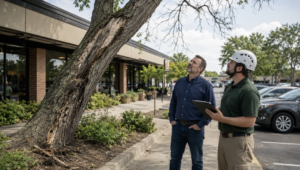
Retail properties are built around visibility, convenience, safety, and customer confidence. Every detail matters, from the parking lot layout to the storefront lighting to the landscaping that shapes the first impression. Trees can make a retail property feel welcoming, established, and attractive, but they can also become a serious liability when they are not properly evaluated. A beautiful tree near a storefront, walkway, sign, drive lane, or outdoor seating area can quickly become a safety concern if it has hidden decay, weak limbs, root damage, storm stress, or structural defects.
For retail property owners, property managers, shopping center operators, and facility teams, tree care is not just a landscaping issue. It is a risk management issue. A neglected tree can damage vehicles, block access, injure customers, disrupt tenants, hurt business operations, and create liability exposure. That is why a professional Tree Hazard Assessment should be treated as part of responsible retail property maintenance, not something to push aside until there is a visible problem.
Retail real estate continues to evolve as physical stores compete to provide better customer experiences, safer environments, and stronger property performance. According to ICSC, retail properties remain an important part of local commerce, community activity, and consumer engagement. When a property owner invests in the condition of the land, the buildings, and the outdoor environment, that investment supports both safety and long-term value.
Retail Properties Carry More Public Safety Responsibility
A retail property is different from a private residence because it is designed to invite the public onto the premises every day. Customers, employees, vendors, delivery drivers, tenants, maintenance crews, and nearby pedestrians may all move through the property. That level of public access creates a higher responsibility to identify hazards before they turn into incidents.
Trees near parking lots, storefront entrances, sidewalks, cart returns, outdoor dining areas, loading zones, and drive-thru lanes should never be ignored simply because they look healthy from a distance. A tree can appear green and full while still having internal decay, structural weakness, root instability, disease, or storm-related damage. These concerns may not be obvious to a property manager walking the grounds, but they can be recognized by a qualified tree professional trained to evaluate risk.
The broader definition of commercial property includes retail centers, restaurants, shopping centers, malls, and other public-facing properties, as explained by Wikipedia. These properties are not just buildings. They include land, parking areas, pedestrian spaces, landscaping, signage zones, drainage areas, and outdoor features that all work together to support the customer experience. Trees are part of that environment, and when they become unstable, they can affect the safety and function of the entire site.
For retail property owners, ignoring tree risk can lead to more than a fallen branch. It can result in emergency closures, blocked entrances, damaged storefronts, broken signs, tenant complaints, insurance claims, and loss of customer trust. A professional assessment helps identify the trees that need attention before a storm, high wind event, heavy rain, or hidden defect creates a larger problem.
Tree Hazards Can Interrupt Business Operations
Retail properties depend on steady access. Customers need to enter and exit safely. Delivery trucks need clear routes. Tenants need their storefronts visible and accessible. Emergency services need open lanes. When a large limb falls across a walkway or a tree fails near a drive lane, the disruption can affect more than one business.
A fallen tree can block parking spaces, damage vehicles, close off a storefront, interrupt foot traffic, or create a safety perimeter that discourages shoppers from entering. Even a partial closure can create frustration for tenants and customers. For a retail center with multiple businesses, one tree-related incident can ripple across the entire property.
Retail property performance is often measured by occupancy, foot traffic, tenant success, and customer experience. Reports such as CBRE’s U.S. Retail Real Estate Market Outlook highlight the importance of retail space availability, tenant demand, and property fundamentals. While market trends are important, day-to-day property conditions also matter. A clean, safe, well-maintained retail environment helps protect the value of the property and the businesses operating there.
Tree hazards are especially important around high-traffic areas. A weak limb above a main entrance, a leaning tree near a parking row, or root damage near pavement can become a direct threat to daily operations. A professional evaluation gives property owners a clearer understanding of which trees are stable, which trees need pruning, and which trees may require removal or further inspection.
Customer Trust Starts Before They Walk Through the Door
Customers begin judging a retail property before they ever enter a store. They notice whether the property feels clean, safe, organized, and cared for. Overgrown, damaged, or unstable trees can send the wrong message. Hanging limbs, cracked branches, deadwood, leaning trunks, or storm-damaged trees may make a property feel neglected.
Retail customers may not know the technical signs of tree risk, but they do recognize when something looks unsafe. A branch hanging over a sidewalk, a tree leaning toward a storefront, or a large dead limb above a parking space can create hesitation. That hesitation can affect how people feel about visiting the property, especially families, older customers, and anyone concerned about safety.
Retail news and commercial real estate reporting often focus on leasing, redevelopment, foot traffic, and consumer behavior, but the physical condition of a property plays a major role in all of those areas. JLL’s U.S. retail market insights show how closely retail performance is tied to market conditions, location quality, and property activity. A property that looks neglected outside can weaken the confidence tenants and customers have in the site.
Tree hazard assessments support the kind of property presentation that retail owners want. They help show that the owner is paying attention, acting responsibly, and investing in safety. That can matter for tenants who are choosing where to lease, customers deciding where to shop, and insurers reviewing risk.
Retail Landscaping Should Support Safety and Property Value
Trees can add tremendous value to retail properties when they are healthy and properly managed. They provide shade, soften large parking lots, improve curb appeal, create visual separation, and help make a shopping center feel more inviting. In many retail settings, mature trees can be part of what makes the property stand out.
However, the value of landscaping depends on proper maintenance. A mature tree that has not been evaluated can shift from asset to liability. Roots can disturb pavement, limbs can interfere with signage, canopies can block lighting, and weakened branches can threaten people or property. The goal is not to remove every tree that presents a concern. The goal is to understand the actual level of risk and make informed decisions.
Commercial real estate organizations such as the National Association of Realtors regularly discuss market insights, valuation, and trends that affect commercial property owners. While tree care may seem like a small piece of the larger property picture, it can contribute to the long-term condition, safety, and usability of the site.
A retail property with healthy, well-managed trees can look more polished and professional. It can also reduce avoidable emergencies. Preventive evaluation often costs less than emergency tree removal, storm cleanup, pavement repair, vehicle damage, tenant disruption, or injury-related liability. For owners managing multiple locations, the savings and risk reduction can become even more significant.
Storms Make Hidden Tree Problems More Dangerous
Retail properties are especially vulnerable during storms because they often include large parking areas, wide-open wind exposure, heavy pedestrian movement, and multiple structures close to trees. A storm does not need to be extreme to expose hidden weakness. High winds, saturated soil, lightning, and heavy rain can all increase the chance of limb failure or tree collapse.
A tree with internal decay may stand for years until strong weather pushes it past its limit. A tree with compromised roots may remain upright until the soil becomes saturated. A limb with a weak attachment point may appear stable until wind pressure causes it to break. These are the kinds of concerns a tree hazard assessment is designed to help identify.
The larger commercial real estate market continues to focus on resilience, property performance, and long-term planning. Cushman & Wakefield provides commercial real estate insights that often center on market strength, risk, and property strategy. For retail owners, resilience should include the outdoor parts of the property as well as the building itself.
Storm preparation should not begin when the forecast turns severe. Retail property owners should know which trees are most likely to cause problems before weather creates urgency. A proactive assessment gives owners time to plan pruning, removal, cabling, monitoring, or further inspection without the pressure of an emergency situation.
Tree Hazards Can Affect Insurance, Liability, and Tenant Relationships
When a tree-related incident happens on a retail property, the questions that follow can be difficult. Was the tree visibly damaged before it failed. Was maintenance documented. Did the owner know about the hazard. Was a qualified assessment completed. Were recommendations followed. These questions matter because they can affect insurance conversations, legal exposure, tenant concerns, and public perception.
Retail property owners do not need to wait for a claim to start thinking about documentation. A professional tree hazard assessment can create a record of responsible property management. It can show that the owner took steps to evaluate conditions, prioritize risks, and address concerns. This kind of documentation can be valuable when managing a property with heavy public use.
Tenants also want to know that the property owner is maintaining the site responsibly. A business leasing space in a retail center depends on safe access, visible signage, customer parking, and a professional exterior environment. When trees are neglected, tenants may feel that their business is being put at risk. When trees are managed well, it helps protect the relationship between property owners and tenants.
Commercial property owners often follow industry news through sources such as CoStar, which covers retail real estate activity, property transactions, leasing, and market movement. While large market trends matter, the practical condition of each property still plays a major role in how well that asset performs. A tree hazard assessment is one of the practical tools owners can use to reduce preventable risk.
Proactive Assessments Are Better Than Emergency Reactions
Emergency tree work is usually more stressful, more expensive, and more disruptive than planned maintenance. When a tree fails unexpectedly, property owners may have to deal with blocked access, damaged property, urgent cleanup, customer safety concerns, and unhappy tenants all at once. That is not the ideal time to make decisions.
Proactive assessment gives owners control. It allows them to prioritize work based on risk level, budget, tenant needs, and property use. A professional may recommend pruning, monitoring, soil or root evaluation, structural support, removal, or additional testing depending on the condition of the tree. The right recommendation depends on the tree, the target area, and the level of risk.
For retail properties, the “target area” is especially important. A tree in a low-traffic green space may not carry the same risk as a tree above a busy entrance, restaurant patio, parking row, or pedestrian walkway. A proper assessment considers not just the tree itself, but also what could be affected if part of the tree fails.
That is why retail property owners should think of tree hazard assessments as part of regular property planning. Just as roofs, lighting, pavement, drainage, signage, HVAC systems, and fire safety features need attention, trees also need professional evaluation. They are living structures, and their condition can change over time.
Conclusion
Retail property owners cannot afford to ignore tree hazard assessment because the risks touch nearly every part of property ownership. Safety, liability, tenant satisfaction, customer trust, curb appeal, storm readiness, insurance conversations, and long-term property value can all be affected by the condition of the trees on site.
A tree that looks beautiful today can become a serious concern if hidden defects go unnoticed. A large limb above a walkway, a leaning trunk near a storefront, or a weakened tree beside a parking lot can create problems that are costly, disruptive, and preventable. Retail properties welcome the public every day, and that makes proactive safety planning essential.
Tree hazard assessment is not just about trees. It is about protecting people, protecting businesses, protecting tenants, and protecting the investment behind the property. For retail owners who want safer, stronger, and more reliable properties, professional tree evaluation is a smart and responsible step.