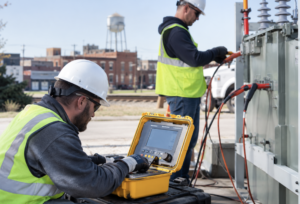
Electrical safety rarely receives much attention until something goes wrong. For retailers, warehouses, service companies, manufacturers, contractors, and other Oklahoma businesses, however, dependable electrical systems and properly maintained protective equipment are part of everyday operations. A damaged insulating glove, deteriorating electrical tool, compromised piece of safety equipment, or unnoticed insulation failure can create a serious hazard long before there are obvious signs of trouble.
That is one reason dielectric testing has become an important part of electrical safety programs for companies in and around El Reno. The testing process helps determine whether insulating materials and electrical protective equipment can withstand specified electrical stresses without allowing dangerous current to pass through them.
For Oklahoma Retail News, the subject reaches beyond the electrical industry itself. Retail businesses depend on power for lighting, refrigeration, security systems, point-of-sale equipment, computers, machinery, HVAC systems, inventory operations, and countless other functions. Behind those everyday systems are electricians, maintenance technicians, utility workers, contractors, and service professionals who may encounter energized equipment.
Businesses seeking professional Dielectric Testing El Reno OK services can use testing as one component of a broader effort to identify potentially compromised insulating equipment before it is placed into service around electrical hazards.
Why Dielectric Testing Matters for Electrical Safety
Dielectric testing evaluates the ability of insulating material or equipment to withstand electrical voltage. The underlying principle is straightforward. Insulation exists to keep electrical current where it belongs and away from workers, surrounding equipment, and conductive surfaces.
The technical concept is commonly described through a dielectric withstand test. According to the Wikipedia overview of dielectric withstand testing, the procedure applies electrical potential to determine the effectiveness of insulation and whether a component can operate safely under specified electrical conditions.
That matters because insulation can deteriorate.
Protective equipment may look perfectly acceptable while containing defects that are difficult to identify through visual inspection alone. Repeated use, improper storage, contamination, cuts, punctures, ozone exposure, heat, chemicals, moisture, abrasion, and ordinary aging can all affect insulating materials.
Dielectric testing provides another layer of information. Instead of relying solely on appearance, testing subjects applicable equipment to controlled electrical conditions intended to determine whether its insulating properties remain adequate for its designated use.
For workers whose jobs place them near electrical hazards, that distinction can be significant.
Electrical Safety Extends Well Beyond Electricians
Electrical safety is sometimes viewed as a concern reserved for power companies or electrical contractors. In reality, electrical systems are part of virtually every commercial operation in Oklahoma.
The U.S. Census Bureau Monthly State Retail Sales program tracks retail activity at the state level across numerous retail subsectors. Those businesses operate stores, facilities, warehouses, offices, distribution locations, service departments, and other properties where electrical systems support daily commerce.
A retailer may never perform high-voltage testing itself, yet it can rely on outside electricians, maintenance companies, utility personnel, equipment technicians, and contractors who work around electrical infrastructure.
Large commercial operations may also employ their own maintenance personnel.
Warehouses have electrical panels, powered material-handling systems, charging equipment, lighting systems, controls, machinery, and distribution equipment. Grocery businesses depend heavily on refrigeration and electrical systems. Automotive businesses operate lifts, diagnostic equipment, chargers, compressors, and powered tools. Large stores may have extensive electrical distribution systems hidden behind what shoppers see.
Electrical safety therefore becomes part of operational safety, even when electricity is not the primary business.
Federal Standards Reinforce the Importance of Electrical Protection
Dielectric testing is not simply an abstract laboratory concept. Federal workplace safety requirements address electrical hazards and the condition of equipment used around them.
The Occupational Safety and Health Administration standard for electrical protective equipment states that covered electrical protective equipment must undergo periodic electrical tests and that the testing method must reliably indicate whether insulating equipment can withstand the voltages involved.
These requirements illustrate an important safety principle. Protective equipment cannot be assumed to remain electrically sound simply because it worked correctly in the past.
OSHA also addresses electrical testing practices more broadly. Its standard governing the use of electrical test instruments and equipment requires qualified persons to perform testing work on electrical circuits or equipment and calls for inspection of test leads, cables, probes, connectors, and related components before use.
That combination of proper testing, qualified personnel, suitable equipment, and regular inspection creates a stronger safety framework than any single precaution alone.
Testing Helps Reveal Problems That May Otherwise Remain Hidden
Visual inspections remain valuable. Cuts, cracking, deterioration, burns, contamination, deformation, or obvious physical damage can provide immediate reasons to remove equipment from service.
The problem is that electrical weakness does not always advertise itself.
A material can retain a normal outward appearance while its insulating properties have deteriorated. Tiny defects may be difficult to see. Previous electrical stress may have affected the material. Storage or environmental conditions may have caused changes that become important only when voltage is applied.
This is where electrical testing serves a different purpose from a visual inspection.
Testing provides measurable evidence about how equipment behaves under controlled electrical stress. Depending on the equipment, applicable standards, and testing procedure, that can help determine whether an item remains suitable for service or should be removed from use.
For businesses, the value is preventive rather than reactive. Discovering a problem during scheduled testing is preferable to discovering it during an electrical incident.
Qualified Testing Supports a Larger Safety Program
Dielectric testing should not be viewed as a standalone substitute for other electrical safety practices. It works best as one part of an organized safety and maintenance program.
The National Fire Protection Association’s NFPA 70E electrical safety standard addresses workplace electrical safety practices, including electrical safety programs, risk assessment, energized work, training, personal protective equipment, and safer working practices.
That broader view is important.
A company can test insulating equipment and still create risk through poor training, inadequate procedures, improper equipment selection, neglected maintenance, or unsafe work practices. Effective electrical safety depends on multiple safeguards working together.
Those safeguards can include qualified personnel, appropriate protective equipment, equipment inspection, maintenance, controlled access to hazardous areas, proper de-energization procedures, training, documentation, and periodic testing where required.
Testing strengthens the system by helping businesses verify one of its most important components: the integrity of electrical insulation and protective equipment.
De-Energizing and Verification Remain Essential Practices
Electrical safety also depends heavily on controlling hazardous energy.
OSHA’s electrical safe work practice requirements under 29 CFR 1910.333 describe procedures for working on or near electrical circuits and include verification requirements before equipment is considered de-energized. The regulation specifies that qualified personnel use test equipment to verify circuit conditions when workers will be exposed to electrical parts.
For businesses and property operators, this highlights why electrical safety cannot be reduced to buying protective equipment and storing it in a cabinet.
Procedures matter. Training matters. Equipment condition matters. Verification matters.
A well-managed electrical safety program treats each of these areas as connected rather than independent.
Why El Reno Businesses Have a Stake in Electrical Safety
El Reno sits within a broader Oklahoma business environment that includes retail operations, contractors, transportation businesses, industrial facilities, service companies, agricultural operations, warehouses, and growing commercial activity.
The Oklahoma Department of Commerce works with companies and communities throughout the state to support employment, investment, infrastructure, business development, and economic growth.
As commercial activity grows, dependable infrastructure becomes increasingly important.
Electrical systems are part of that infrastructure.
Business owners naturally focus on sales, customers, staffing, inventory, marketing, expansion, and operating costs. Maintenance and electrical safety may receive less attention because their greatest value often comes from problems that never happen.
Preventive safety rarely produces a dramatic headline when it works.
Instead, equipment remains available. Workers complete their jobs safely. Facilities continue operating. Maintenance problems are identified before escalating. Businesses avoid unnecessary interruptions.
That quiet reliability is exactly what makes preventive electrical testing valuable.
Electrical Incidents Can Affect Much More Than a Single Piece of Equipment
The consequences of electrical failures can extend beyond the immediate electrical component involved.
An incident can affect workers, surrounding equipment, facility operations, customers, contractors, inventory, production schedules, and business continuity. Depending on the circumstances, electrical problems may also contribute to fire hazards, equipment damage, interrupted operations, or costly repairs.
Retail operations can be especially sensitive to downtime.
When critical electrical systems stop functioning, payment systems, refrigeration, lighting, communications, computer networks, security systems, doors, HVAC equipment, and warehouse operations may also be affected.
Testing and preventive maintenance cannot eliminate every possibility of equipment failure. They can, however, help businesses identify certain vulnerabilities before those vulnerabilities become larger operational problems.
Documentation Adds Value to the Testing Process
Good testing programs also create records.
Documentation can show what equipment was tested, when the testing occurred, whether the equipment passed applicable requirements, and when additional testing may be necessary.
For insulating protective equipment covered by OSHA requirements, recordkeeping and certification can be important components of compliance. OSHA’s electrical protective equipment provisions include requirements related to certifying that certain insulating equipment has been tested and identifying the equipment and date of testing.
From a management standpoint, accurate records also make maintenance easier.
Instead of relying on memory or informal practices, companies can build repeatable schedules. Equipment can be tracked. Test dates can be reviewed. Items approaching required testing intervals can be identified. Equipment that fails can be documented and removed from service.
That creates accountability and makes electrical safety easier to manage over time.
Safety and Business Continuity Are Closely Connected
Electrical safety is first and foremost about protecting people, but sound safety practices can also support business continuity.
Preventive programs encourage businesses to identify vulnerabilities before an emergency forces action. This approach applies throughout facility management, from fire protection and HVAC maintenance to vehicle inspections and electrical systems.
Dielectric testing follows the same principle.
A planned inspection or test occurs under controlled circumstances. A failure in active service does not.
That difference can mean fewer surprises for facility managers, maintenance supervisors, contractors, and business owners responsible for keeping operations running.
For Oklahoma companies that depend on electrical infrastructure every day, preventative testing can therefore be viewed as part of responsible maintenance rather than an isolated technical procedure.
A Stronger Electrical Safety Culture Benefits Oklahoma Businesses
The larger lesson for Oklahoma Retail News is that electrical safety belongs within the broader conversation about operating dependable businesses.
Retail stores and commercial facilities may appear far removed from specialized electrical testing, yet every modern business relies on electricity. Behind the outlets, lights, registers, refrigeration systems, machinery, computers, and building controls are electrical systems requiring proper installation, maintenance, and servicing.
Workers responsible for those systems deserve equipment that has been properly inspected and tested according to applicable requirements.
Businesses also benefit when safety procedures become routine rather than reactive.
Dielectric testing helps support that culture by replacing assumptions with measurable testing. Equipment that passes can return to service according to the applicable testing requirements. Equipment that does not meet those requirements can be identified before a worker depends on it for protection.
Conclusion
Electrical systems are so deeply integrated into modern business that their reliability is often taken for granted. Oklahoma retailers, warehouses, commercial properties, contractors, manufacturers, and service companies depend on electricity every hour they operate.
That dependence makes electrical safety an operational priority.
Dielectric testing provides an important method for evaluating whether applicable insulating equipment can withstand electrical stress and continue performing its protective function. Combined with qualified personnel, visual inspections, proper maintenance, documentation, training, safe work practices, and established electrical safety standards, testing can contribute to a stronger overall safety program.
For El Reno and the surrounding Oklahoma business community, the value is practical. Preventive electrical safety practices help protect workers, maintain equipment integrity, support reliable operations, and reduce the likelihood that an unseen electrical weakness becomes a serious incident.
As Oklahoma businesses continue to operate, expand, and modernize, attention to the systems working behind the scenes will remain essential. Dielectric testing is one of those behind-the-scenes safeguards that receives little public attention when everything goes right, yet plays an important role in keeping electrical work safer when it matters most.