
Built on Solid Ground: Why Retail Stores Need a Soil Report Before They Build 🏬🧱

Retail News for Soil Report Near Me

Opening a retail store is exciting. The brand is ready, the location looks perfect, and the spreadsheets say the numbers work. But there’s one part of the project that can quietly decide whether the build stays on budget, passes inspection smoothly, and avoids expensive surprises after opening day: the soil under the site.

A Soil Report (often called a geotechnical report) is the “truth-teller” for what’s happening below grade. It helps architects, engineers, developers, and owners design the building and sitework based on real conditions—not assumptions. In retail, where timelines are tight and every delay can mean lost revenue, that clarity matters.

For context on the industry side of things, retail continues to invest in new formats, remodels, and store expansion, which keeps site readiness and construction risk front and center for growth-minded brands. Sources that regularly cover those retail moves include National Retail Federation (NRF), Retail Dive, Chain Store Age, Retail TouchPoints, ICSC Exchange, and Retail Week. For a baseline definition of the retail category itself, Retail (Wikipedia) is a simple reference point.

A Soil Report protects the retail budget from “invisible” costs 💸

Retail builds have a way of looking straightforward on the surface: slab, walls, roof, parking, utilities, signage. The issue is that soil conditions can force expensive changes after the project is already underway—when change orders cost the most.

A geotechnical investigation identifies things like low bearing capacity soils, compressible layers, expansive clays, high groundwater, undocumented fill, and risk of settlement. These are the kinds of issues that can require thicker slabs, deeper foundations, over-excavation and replacement, lime/cement stabilization, geogrid reinforcement, or drainage redesign. When those decisions happen late, the budget takes a hit. When they happen early—based on a Soil Report—the team can price it accurately and choose the most cost-effective solution.

Soil-related movement is especially dangerous for retail because it shows up where customers notice it: cracked tile, uneven floors, stuck doors, drywall cracks, and warped storefront systems. Preventing those outcomes starts with knowing what the soil will do under the building’s load. ICC Digital Codes+1

It supports code compliance and smoother permitting ✅

Many jurisdictions require a geotechnical report for certain site conditions, building sizes, or foundation types—and building officials often expect the report to inform the foundation and earthwork design. The International Building Code’s Chapter 18 covers soils and foundations and includes reporting requirements when a geotechnical investigation is required. ICC Digital Codes+1

For retail owners and developers, this matters because permitting speed affects opening dates. A complete Soil Report helps reduce back-and-forth during plan review, supports the structural engineer’s foundation design, and provides clear criteria for compaction, fill placement, and site preparation. In practical terms, it’s one of the best ways to keep approvals, inspections, and construction moving in the right order.

Retail floors demand performance, and soil drives slab success 🧱

Retail stores live and die by the customer experience. That includes the feel of the space—flat floors, clean finishes, aligned shelving, smooth transitions between departments, and doors that operate properly every day.

Soil reports guide slab design and subgrade preparation to reduce cracking and differential settlement. They also inform how to handle moisture and groundwater conditions that can migrate into the slab system. This is particularly important for retailers installing large-format tile, polished concrete, specialty coatings, or sensitive floor finishes where curling and moisture vapor transmission can become a costly problem.

The Soil Report becomes the “rules of the road” for earthwork: how much to proof-roll, what to remove, what to replace, how to compact, and what densities and moisture ranges to hit. Those details directly influence whether the slab behaves like the design assumed it would. ASTM International | ASTM+1

It reduces schedule risk, which protects opening day 📅

Retail projects often run on aggressive timelines. Lease milestones, seasonal sales cycles, staffing plans, and merchandising schedules are all tied to the opening date. Soil surprises can wreck that calendar.

A Soil Report reduces the odds of discovering bad fill, unsuitable soils, or high groundwater after excavation begins. It also helps the team select the right foundation system upfront, rather than redesigning midstream. Even when challenging soil conditions exist, knowing early allows procurement and sequencing to adjust—bringing specialty trades in at the right time and preventing long stoppages.

In the retail world, where stores are frequently opening, renovating, and reformatting locations, development coverage often highlights how timing and execution make the difference between a smooth rollout and a costly delay. Planning the ground conditions is part of that execution discipline. chainstoreage.com+1

Drainage, stormwater, and flood risk start in the ground 🌧️

Retail sites come with large paved areas: parking lots, drive aisles, loading zones, dumpster enclosures, and sometimes outparcels. Water management is a major factor—both for compliance and long-term maintenance.

Soil infiltration characteristics affect stormwater plans, retention/detention performance, and the stability of pavements and subgrades. High groundwater or poor drainage soils can increase the risk of pumping during excavation, subgrade softening, and premature pavement distress.

In flood-prone regions, the relationship between the building foundation and surrounding grade is especially important. FEMA’s flood-related guidance and technical bulletins emphasize design considerations that relate to foundations, drainage, and reducing flood damage. Those considerations tie directly back to site conditions, groundwater behavior, and how the building interacts with the soil. FEMA+2FEMA+2

It helps protect the brand from long-term building and pavement problems 🚗

Retail isn’t just a building. It’s also everything outside: parking, loading, sidewalks, curb ramps, cart corrals, and delivery routes. Weak subgrade conditions can cause settlement in pavements and flatwork, leading to ponding water, cracked sidewalks, trip hazards, and customer complaints.

A Soil Report helps civil engineers design pavement sections appropriate for real traffic loads—especially for stores with frequent delivery trucks, heavy dumpsters, or high-turnover parking. It also helps identify areas where pavement subgrades will require stabilization or undercut to avoid failures later.

From an operations standpoint, these issues become repeat expenses: patching asphalt, re-leveling sidewalks, re-striping after repairs, and managing liability risk. Spending money on the soil report up front is often cheaper than paying for years of reactive repairs after the store opens.

Lenders, insurers, and stakeholders expect real risk management 🧾

Retail developments often involve lenders, investors, landlords, and national brand stakeholders. Those groups want fewer unknowns—especially unknowns that can create structural risk, cost overruns, or schedule blowups.

A Soil Report shows that the project team investigated subsurface conditions professionally and designed the foundation and sitework based on evidence. It also helps document that construction followed appropriate geotechnical standards and reporting practices. ASTM publishes geotechnical engineering standards that support investigation, testing, and documentation expectations across the industry. ASTM International | ASTM+1

This is part of what separates a “hope it works” build from a professionally managed project that scales across multiple store locations.

It improves decision-making for site selection and expansion 🌍

Retail growth depends on picking sites that can be built efficiently. Two parcels can look identical from the street and have completely different subsurface conditions. One might be clean native soils with great bearing capacity. Another might be uncontrolled fill, compressible layers, or high groundwater that adds significant cost.

When retailers are expanding—whether through ground-up builds, new formats, or adaptive reuse—soil and subsurface conditions can make a “great deal” turn into an expensive problem. Early geotechnical work supports smarter site selection and better forecasting, especially when a brand is rolling out multiple locations and needs predictable build costs.

Conclusion: Strong retail starts below grade 🧱✨

A Soil Report near me is not paperwork for paperwork’s sake. It is one of the clearest ways a retail store owner or developer can protect the budget, defend the schedule, support code compliance, and prevent long-term performance issues that damage the customer experience.

Retail is competitive. Openings matter. Remodels matter. Brand consistency matters. A store that looks flawless on day one but fights cracking floors, drainage issues, or settlement a year later is paying for what it didn’t learn early enough.

Build the store you want customers to remember—by starting with the ground it stands on. ✅🏬
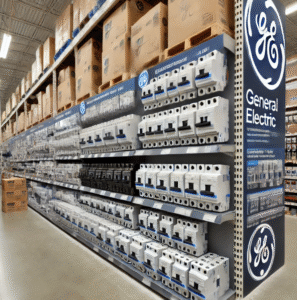
Why Smart Retailers Choose General Electric Breakers for Safer, More Profitable Stores 🛍️⚡

Retail News for general electric breakers

Retail runs on power—literally. From dazzling lighting that draws shoppers in, to point-of-sale (POS) terminals, refrigeration, HVAC, security cameras, and increasingly dense back-of-house tech, a store’s electricity is its lifeline. One silent component determines whether all of that stays dependable and safe: the circuit breaker. For many retailers, choosing General Electric (GE) breakers is a practical, long-term decision that protects people, preserves uptime, and keeps margins healthy.

The Business Case: Power Reliability Is Retail Revenue

Every minute a store is dark or a register is down is a minute of lost sales and shaken customer trust. Power interruptions cascade fast—freezers warm, lines form, and staff scramble to triage equipment. GE breakers are engineered to trip precisely when they’re supposed to and stay out of the way when they’re not, reducing nuisance trips that cause preventable downtime. In multi-circuit retail environments—from boutique footprints to big-box locations—the reliability of these protective devices translates into more consistent operations, steadier revenue, and a better shopping experience.

That reliability also matters across fleets. National and regional retailers need consistent protective gear from store to store so facilities teams, vendors, and electricians can work faster with fewer errors. Standardizing on a widely supported breaker family streamlines maintenance, replacement, and training—compounding savings across a portfolio.

Safety First: Protecting People, Equipment, and Inventory

Modern retail is dense with electronics: LED drivers, POS systems, touchscreens, Wi-Fi access points, self-checkout kiosks, digital signage, and refrigeration controllers. GE breakers help create a layered safety posture:

  • Thermal-magnetic protection to guard branch circuits from overloads and short circuits.

  • Ground-fault and arc-fault options (where applicable) to mitigate the kinds of faults that lead to shocks, equipment damage, or fires in busy public spaces.

  • Selective coordination when used with compatible upstream devices, helping ensure only the affected circuit trips rather than plunging a whole department—or the whole store—into darkness.

When a breaker performs predictably in a fault, staff and customers are safer, and valuable equipment—from compressors to registers—avoids catastrophic damage. That’s risk management with direct financial impact.

Speed and Simplicity: Maintenance That Doesn’t Disrupt the Floor

Retail thrives on predictability. When a breaker needs replacement, facilities teams want it done fast and right the first time. GE’s extensive distribution footprint, clear labeling, and compatibility within product families help technicians identify, source, and swap components quickly. In practical terms, that means:

  • Less time with ladders in aisles or lifts in vestibules.

  • Fewer after-hours service calls.

  • Streamlined work orders for store managers and corporate facilities.

For retailers managing hundreds of locations, this “everyday efficiency” rolls up into meaningful cost avoidance and fewer operational headaches.

Scalability for Rollouts, Remodels, and New Concepts

Retail doesn’t sit still—seasonal resets, remodels, pop-ups, and rebrands all put stress on electrical systems. GE breakers fit into modular approaches to panel design and circuit expansion, making it easier to add new loads (like self-checkout banks or refrigerated endcaps) without reworking the entire distribution strategy. With consistent breaker families and accessories, electrical contractors can plan upgrades that slot neatly into existing gear, shortening project timelines and keeping stores open.

Energy and Sustainability Wins Without Compromising Safety

Efficient operations are now a brand standard. As retailers adopt LED retrofits, smarter HVAC strategies, and energy-aware controls, electrical protection has to keep up. GE breaker options that coordinate with metering, surge protection, and downstream controls support:

  • Cleaner power for sensitive electronics.

  • Lower maintenance on lighting and refrigeration due to fewer transient events.

  • Better measurement and verification when paired with metering—so energy projects can be proven and scaled.

Sustainability isn’t only about utility bills; it’s also about making equipment last longer and avoiding wasteful failures. Breakers that trip appropriately and coordinate with upstream devices help preserve expensive assets.

Code Confidence: Built for Inspection and Compliance

Inspections are part of retail reality—especially for new builds and remodels on tight schedules. Breakers that meet prevailing standards and are backed by comprehensive documentation help keep projects moving. GE’s long history in power distribution gives specifiers and inspectors confidence in listings, short-circuit ratings, and coordination data. For retail leaders, that means fewer surprise delays and smoother handoffs from construction to store operations.

Protection Tailored to Retail Loads

Not all circuits are the same. Retailers benefit from aligning breaker choices with the quirks of each load:

  • Refrigeration and freezers: Inrush currents at compressor start-up can mimic faults to a lesser breaker. Choosing the right curve and rating minimizes nuisance trips that threaten inventory.

  • Lighting and signage: LED drivers can present harmonics or transient behavior. Robust protection helps keep front-of-house presentation pristine.

  • POS and IT racks: Sensitive electronics need stable power and fast fault clearing. Coordinated breakers and proper grounding reduce device failures and data-loss risk.

  • Back-of-house equipment: Balers, compactors, printers, and small conveyor motors benefit from properly sized protection that tolerates expected surges but reacts quickly to genuine faults.

Configuring protection thoughtfully with a reputable breaker platform reduces everyday frustrations and preserves the shopper experience.

Total Cost of Ownership: The Quiet ROI

Breakers aren’t a line item most retail executives obsess over—but they influence plenty of the ones that matter:

  • Fewer nuisance trips → fewer refunds, abandoned carts, and customer complaints.

  • Shorter service calls → lower lifetime maintenance spend.

  • Better asset protection → fewer replacement compressors, drivers, and registers.

  • Simplified training → store teams and vendors move faster and make fewer mistakes.

Across a chain, those quiet wins add up. Selecting a dependable, widely supported breaker family is a small, high-leverage decision.

Resilience for Omnichannel and Experiential Retail

Today’s stores operate as showrooms, micro-fulfillment hubs, and brand stages—all at once. That means more coolers, more screens, more scanners, more chargers, and more automation. Power incidents ripple further than ever. GE breakers, paired with sound panelboard design and surge protection, form the backbone of resilience for:

  • BOPIS and curbside pickup staging, where cold chain integrity and POS uptime are non-negotiable.

  • Experiential zones with lighting rigs, audio, and interactive displays that require stable power.

  • Back-room fulfillment tech (labelers, handhelds, RF chargers) that depends on clean, uninterrupted circuits.

Stable electrical protection sustains the omnichannel promise shoppers expect.

Supply Chain and Availability: Parts When and Where You Need Them

Retail moves fast, and facilities leaders need parts that are actually on shelves. GE breakers’ broad availability through electrical distributors means stores and service partners can get what they need quickly, reducing downtime when issues arise. That availability also simplifies capital planning: procurement teams can standardize SKUs and avoid long-tail, hard-to-source items that derail projects.

Future-Ready Infrastructure for What’s Next

From EV charging at the curb to smart shelves inside, retail electrification is accelerating. Breakers that integrate cleanly with evolving panelboard, metering, and surge protection ecosystems give retailers room to grow. Choosing a robust, well-documented platform now prevents costly rework later and creates a foundation for innovations that haven’t even hit the floor yet.

Reinforcing the Case with Industry Perspective

Strong electrical protection isn’t just a facilities topic; it intersects with broader industry priorities like operational resilience, customer experience, and loss prevention. To keep a finger on the pulse of how leading retailers think about store operations, resilience, and modernization, explore these authoritative resources:

  • Retail Dive for breaking developments in store operations and technology adoption across major brands.

  • National Retail Federation News for policy, operations, and resiliency insights affecting retailers of all sizes.

  • CNBC Retail for executive-level context on how operational investments (including infrastructure) influence sales, margins, and stock performance.

  • Retail (Wikipedia) for a high-level overview of the retail industry’s structure and evolving formats.

Each link offers context that reinforces why seemingly “back-room” decisions—like standardizing on GE breakers—show up on the sales floor as smoother operations, happier customers, and stronger financials.

Conclusion: Quiet Hardware, Loud Results 🏁

In retail, the best infrastructure is invisible to shoppers and invaluable to operators. General Electric breakers deliver predictable protection, broad availability, and portfolio-wide standardization that reduce downtime, safeguard people and assets, and keep the lights—and lanes—on. As stores take on new roles and technologies, dependable electrical protection becomes even more mission-critical. Investing in a trusted breaker platform is one of those quietly strategic choices that pays off day after day, transaction after transaction, across every aisle.