
Why Texas Retail Developers Are Turning to Dallas Architects for Smarter Design

Retail News for Architect Near Me Dallas TX

Texas retail is entering a period in which good design is expected to do far more than create an attractive storefront. Developers are looking for buildings that can respond to changing consumer habits, accommodate several uses, operate efficiently, support strong tenant identities, and remain relevant as neighborhoods evolve. In that environment, Dallas architects are playing an increasingly important role in shaping the next generation of retail development across the state.

The scale of the opportunity is significant. The Texas Comptroller of Public Accounts identifies retail as the largest contributor to Texas sales tax collections, underscoring how closely retail activity is tied to the broader state economy. Retail development is no longer simply about filling commercial space. It is an economic development issue, a land-use issue, a customer-experience issue, and increasingly an architectural strategy.

Developers working in Dallas and throughout Texas are responding by placing more emphasis on architecture early in the planning process. They are looking beyond square footage and tenant counts toward projects that create destinations, support long-term flexibility, and make commercial properties more valuable to the communities around them.

Dallas Sits at the Center of a Powerful Retail Market 🏙️

Dallas offers architects a particularly strong environment for understanding how retail, transportation, housing, office space, entertainment, and hospitality can work together. The city itself recorded approximately $31.9 billion in total retail sales in 2022, according to the U.S. Census Bureau. The same federal data shows a 2020 population above 1.3 million, illustrating the size of the consumer base within the city before the wider Dallas-Fort Worth region is even considered.

That scale exposes Dallas architects to retail projects serving very different audiences. A neighborhood shopping center may require an entirely different approach from a luxury retail district, mixed-use development, entertainment center, restaurant destination, or large regional commercial property.

Working in a market with that degree of variety can sharpen an architect’s understanding of pedestrian circulation, parking, visibility, tenant access, customer flow, signage opportunities, outdoor gathering areas, service access, and the relationship between a property and the roads surrounding it.

Wikipedia’s overview of Dallas also places the city within the much larger Dallas-Fort Worth metropolitan area, one of the nation’s largest population centers. That regional reach matters to retailers because commercial properties frequently serve customers far beyond the immediate neighborhood surrounding a project.

Retail Architecture Is Becoming More About Experience

A successful retail property has to earn a visit. Online shopping has given consumers extraordinary convenience, which means physical retail environments increasingly need to provide something that cannot be replicated through a screen.

Architecture helps create that distinction.

The arrival sequence, storefront proportions, landscaping, lighting, shade, walkways, gathering areas, materials, visibility, and connections between tenants all influence the way customers experience a retail property. A thoughtfully designed center can encourage people to walk between businesses rather than drive from one side of the site to the other. Restaurants can spill into outdoor areas. Retail spaces can connect visually with plazas. Entertainment uses can help extend activity into the evening.

The result is a property that functions as more than a group of individual leases.

Industry reporting from ICSC continues to document major mixed-use and retail projects taking shape in Texas, including large developments combining commercial space with housing and other uses. The trend illustrates how retail is increasingly being planned as one piece of a broader destination rather than as an isolated component.

For architects, that shift creates a more complicated assignment. Buildings must support individual businesses while also contributing to the identity and performance of an entire district.

Smarter Design Begins Long Before Construction

Some of the most important architectural decisions are made before the exterior appearance of a building is determined.

Site orientation can affect visibility and energy performance. The placement of entrances influences circulation. Service areas can either interfere with customer activity or remain largely invisible. Parking arrangements can make a property comfortable to navigate or create unnecessary conflicts between vehicles and pedestrians.

Retail developers therefore benefit when architects are involved early enough to evaluate the complete site rather than being asked simply to design a building after major development decisions have already been made.

Developers searching for an Architect Near Me Dallas TX are often dealing with more than aesthetics. They may need architectural guidance involving site conditions, commercial functionality, future tenant requirements, circulation, redevelopment opportunities, permitting considerations, and the relationship between the project and surrounding development.

The strongest solutions bring those factors together rather than treating them as separate problems.

Dallas Planning Is Encouraging a Broader View of Commercial Development

Retail architecture is also affected by the way cities plan for future growth.

The City of Dallas has adopted ForwardDallas 2.0, a comprehensive land-use plan intended to guide future development and infrastructure investment. The city’s planning materials address mixed-use development, commercial corridors, transportation connections, redevelopment, walkability, and other issues that directly influence the future of retail property.

This broader planning environment helps explain why architectural strategy matters so much to developers.

A retail project does not exist independently from the city around it. It connects to streets, neighborhoods, transit systems, utilities, nearby businesses, residential areas, and future development. Properties that acknowledge those relationships may be better positioned to remain useful as surrounding areas change.

Dallas architects working regularly within this environment become familiar with the tension between automobile access and pedestrian activity that defines many Texas commercial developments. Smart retail design does not necessarily eliminate the car. Instead, it finds better ways to accommodate vehicles while creating comfortable spaces for people once they arrive.

Flexibility Is Becoming a Valuable Retail Design Feature 🏬

Retail moves quickly. A building designed around one tenant’s exact operating model can become difficult to lease when that tenant eventually leaves.

Developers are increasingly interested in spaces that can adapt.

That may mean designing structural bays that support different tenant configurations, locating utilities strategically, allowing storefronts to be reconfigured, or creating spaces capable of accommodating retail, dining, service, entertainment, or other commercial uses over time.

Flexibility can be especially valuable in mixed-use developments where the ideal combination of tenants may change as the surrounding neighborhood matures.

AIA Dallas regularly highlights the role architecture plays in the city’s evolving built environment. The organization describes itself as both an advocate for regional architects and a resource for clients and the community. Projects featured by AIA Dallas also demonstrate the growing emphasis on mixed use, adaptable structures, active ground floors, and long-term planning within Dallas development.

Future-ready architecture does not require predicting exactly how consumers will shop decades from now. It requires avoiding unnecessary design decisions that prevent a property from changing when the market does.

Texas Growth Raises the Stakes for Retail Development

Texas continues to command attention from businesses, investors, developers, and retailers. That activity creates opportunity, but it also increases competition.

The Federal Reserve Bank of Dallas continues to track employment, business activity, economic conditions, and other forces shaping the Texas economy. The state’s expanding commercial environment means retail developers are often competing not only for customers but also for desirable tenants and investment capital.

Architecture can contribute to that competition in practical ways.

A property that is distinctive without being impractical can strengthen its identity. Efficient planning may reduce wasted space. Thoughtful access can make the property easier for customers to use. Better pedestrian connections can support multiple tenants during the same visit. Attractive public spaces can increase the amount of time people remain on the property.

These characteristics can also influence how a development is perceived long before anyone steps inside an individual store.

Retailers considering several locations are evaluating the environment around their potential space. Developers who create a stronger overall destination may therefore offer something more valuable than an empty suite and a parking lot.

Mixed-Use Development Is Changing the Definition of Retail

One of the most noticeable changes in Texas development is the continuing integration of retail into larger mixed-use environments.

Apartments, offices, hotels, restaurants, entertainment venues, public spaces, and stores can now exist within a single development. Instead of depending entirely on destination shoppers, retail tenants may benefit from customers already living, working, staying, or spending time on the property.

This changes architectural priorities.

The architect must consider how different users move through the site throughout the day. Residents need privacy and convenient access. Retailers need visibility. Restaurants may require dedicated service areas and outdoor seating. Offices need efficient entrances and parking connections. Hotels bring another pattern of arrivals and departures.

The architecture has to make these uses feel connected without allowing them to interfere with one another.

For Texas developers, that type of coordination can determine whether mixed-use feels like a genuine district or merely several unrelated buildings occupying the same property.

Redevelopment Is Creating New Opportunities Across Dallas

Not every important retail project begins with vacant land.

Older shopping centers and commercial corridors represent major redevelopment opportunities throughout Dallas. Some properties occupy excellent locations but were designed around retail patterns that no longer match the surrounding community.

Architecture can help reposition those sites.

An aging center may gain new relevance through improved storefronts, additional landscaping, outdoor dining, better pedestrian circulation, new tenant configurations, updated materials, enhanced lighting, or the addition of residential and other complementary uses.

In some cases, the smartest design decision is not demolition. Existing buildings may contain valuable structural assets that can be adapted to a new purpose.

This approach can preserve useful investment while allowing a commercial property to respond to contemporary expectations. It also gives developers an opportunity to create something distinctive from a site that customers may have passed for years without noticing.

Sustainable Design Is Becoming Practical Business Strategy 🌱

Energy efficiency and responsible development have moved closer to the center of commercial planning.

Texas heat makes building orientation, glazing, shading, landscaping, roofing, mechanical systems, and material selection especially important. These decisions influence both customer comfort and building performance.

For retail environments, outdoor spaces require particular attention. A plaza that looks attractive on a rendering but becomes uncomfortable during a Texas afternoon will not function as intended. Shade structures, trees, covered walkways, air movement, and properly positioned gathering areas can make outdoor retail environments substantially more usable.

Sustainability can also support adaptability. Buildings that remain useful for longer periods reduce the pressure to repeatedly replace structures whenever market preferences change.

For developers focused on long-term asset performance, durable and adaptable architecture can be just as important as highly visible environmental features.

The Architect’s Role Is Expanding

Retail developers once could view architects primarily as professionals responsible for transforming a program into drawings and construction documents. Modern commercial development increasingly demands something broader.

Architects are being asked to understand consumer behavior, tenant needs, local context, changing land-use patterns, building performance, branding, flexibility, and the way people experience a place.

That expanded role is one reason Dallas architects are becoming increasingly valuable to retail developers across Texas.

Their work sits at the intersection of design and commerce. A successful project must satisfy both.

Beautiful architecture that does not function commercially creates problems. Purely functional development without a memorable identity can struggle to distinguish itself. Smarter design finds the balance between the two.

Conclusion

Texas retail development is becoming more sophisticated because the forces shaping retail are becoming more complex. Consumers expect convenience and experience. Retailers want flexible, visible locations. Cities are thinking more carefully about land use and walkability. Developers want properties capable of remaining competitive for years rather than simply opening successfully on day one.

Dallas architects are positioned within one of the state’s most active commercial environments, giving them direct exposure to these changes. Their influence can be seen in the movement toward mixed-use destinations, adaptable retail spaces, redevelopment of aging commercial properties, stronger pedestrian environments, and projects designed around the complete customer experience.

For Texas retail developers, smarter architecture is no longer limited to the appearance of a building. It is part of the business strategy behind the property itself. As retail continues to evolve, developments that connect architecture, commerce, community, and long-term flexibility will be better prepared for whatever comes next.

How Texas Healthcare Management Consulting Is Transforming the Retail Healthcare Industry

Retail News for Texas Healthcare Management Consulting

Retail healthcare is changing the way Texans access everyday health services. Pharmacies, walk-in clinics, health and wellness retailers, grocery-based clinics, urgent care operators, and other consumer-facing healthcare businesses are increasingly expected to deliver the convenience of retail while maintaining the standards, compliance requirements, and operational discipline of healthcare.

That combination creates a complicated business environment. A retail healthcare location has to manage staffing, patient flow, technology, inventory, financial performance, regulatory requirements, customer experience, and clinical operations at the same time. As organizations expand across Texas, those demands become even more difficult to coordinate.

This is one reason Texas Healthcare Management Consulting is becoming increasingly relevant to organizations operating where healthcare and retail intersect. Experienced management guidance can help organizations improve operations, control costs, strengthen workflows, plan expansion, and create a more consistent experience across locations.

The transformation is particularly significant in Texas, where large metropolitan markets, continued population growth, strong retail activity, and geographically diverse communities create opportunities for new healthcare delivery models. 🏥🛍️

Retail Healthcare Is Becoming Part of Everyday Consumer Life 📈

Traditional healthcare has historically centered on hospitals, physician offices, and large medical facilities. Retail healthcare takes a different approach by bringing certain services closer to where consumers already live, work, shop, and conduct everyday errands.

The model can include clinics connected to pharmacies, grocery stores, shopping centers, wellness businesses, and other consumer-oriented locations. Wikipedia’s overview of retail clinics describes retail clinics as walk-in healthcare locations commonly situated inside pharmacies, supermarkets, and other retail environments.

Convenience is an important part of the appeal. Consumers have become accustomed to quick transactions, digital communication, straightforward scheduling, and accessible locations throughout the retail economy. Those expectations do not disappear when a consumer needs healthcare.

Retail healthcare businesses therefore have to balance two very different operating environments. Healthcare requires accuracy, privacy, professional standards, documentation, and careful patient management. Retail demands convenience, efficient service, accessible locations, predictable experiences, and strong customer satisfaction.

Management consulting can help connect those priorities rather than allowing them to compete with one another.

Texas Creates a Powerful Environment for Retail Healthcare Growth 🌟

Texas offers an unusually large and diverse market for organizations exploring consumer-focused healthcare models. Major metropolitan areas such as Houston, Dallas-Fort Worth, Austin, San Antonio, El Paso, and the Rio Grande Valley each have different demographic patterns, competitive environments, operating costs, and healthcare needs.

The broader retail sector is also an important part of the Texas economy. The Texas Comptroller’s retail sales tax reporting identifies retail as the state’s largest contributor to sales tax collections, illustrating the scale of consumer commerce across Texas.

Retail activity is not uniform across the state. The Comptroller also publishes retail trade data by Texas metropolitan statistical area, allowing businesses and economic observers to compare activity in markets such as Austin-Round Rock, Amarillo, Brownsville-Harlingen, Beaumont-Port Arthur, and other Texas regions.

For retail healthcare organizations, differences among these markets matter. A successful clinic concept in a rapidly growing suburban community may need a different staffing model, service mix, operating schedule, or expansion strategy than a location serving a dense urban neighborhood.

Healthcare management consultants can help companies evaluate those differences before making major investments.

Better Operations Can Strengthen the Retail Healthcare Experience ⚙️

Operational efficiency has a direct effect on both business performance and the customer experience. A healthcare retailer may have an attractive location and strong consumer demand, but inefficient systems can quickly create longer waits, scheduling problems, inventory shortages, employee frustration, duplicated work, and unnecessary administrative expenses.

Management consultants can analyze how work actually moves through an organization. That can include examining appointment scheduling, check-in procedures, staffing levels, patient communication, billing processes, inventory management, reporting systems, vendor relationships, and internal responsibilities.

The objective is not simply to reduce expenses. Effective operational improvement removes unnecessary friction.

A streamlined process may allow employees to spend less time dealing with repetitive administrative tasks and more time helping customers and patients. Better reporting can give executives clearer insight into individual location performance. Standardized processes can also make it easier to maintain consistency when an organization operates multiple Texas locations.

For retail healthcare companies planning significant growth, creating repeatable operating systems early can be particularly valuable.

Texas Retail Data Is Becoming More Important to Business Planning 📊

Healthcare businesses operating in retail environments cannot analyze healthcare demand alone. They also need to understand broader consumer and retail conditions.

The U.S. Census Bureau’s Monthly State Retail Sales program provides state-level retail sales estimates across multiple retail subsectors. This type of information gives businesses another perspective on consumer activity and economic conditions affecting retail markets.

Regional economic information can provide additional context. The Federal Reserve Bank of Dallas Texas Service Sector Outlook Survey tracks business conditions including revenue, employment, wages, prices, and general business activity. Beginning in 2026, retail companies are incorporated into the broader service-sector survey rather than being published through a separate Texas Retail Outlook Survey.

This matters because retail healthcare operates within both the healthcare economy and the consumer economy.

A company deciding whether to open additional locations may consider local population characteristics, commercial development, labor availability, competition, operating costs, consumer traffic, healthcare demand, and regional business conditions.

Consultants can help leadership teams organize that information into practical decisions rather than relying on isolated data points.

Workforce Strategy Is Critical in Texas Retail Healthcare 👩‍⚕️

People remain one of the largest operational considerations for any healthcare organization.

Retail healthcare presents its own staffing challenge because businesses may need clinical professionals, administrative employees, customer-facing staff, managers, billing specialists, technology personnel, and regional leadership. Staffing requirements can become increasingly complex as locations multiply.

The Texas Workforce Commission’s Texas Workforce Report describes retail trade as a large and changing Texas industry and provides employment information useful for understanding the scale and direction of the state’s workforce.

Healthcare retailers have an additional layer of complexity because certain positions require specialized credentials, training, and defined responsibilities.

Management consultants can assist organizations with workforce planning, organizational structure, performance measurement, recruitment strategy, scheduling processes, management responsibilities, and employee retention initiatives.

An effective workforce strategy also supports expansion. Companies that understand exactly which roles are necessary at the location, regional, and corporate levels are generally better positioned to replicate their operations without creating unnecessary layers of management.

Technology Is Connecting Healthcare and Retail Operations 💻

Modern retail healthcare depends heavily on technology.

Consumers increasingly interact with organizations through online scheduling, digital forms, text notifications, patient portals, electronic records, electronic payments, telehealth systems, and other digital tools. Behind the scenes, businesses may rely on analytics platforms, inventory systems, workforce scheduling software, billing systems, cybersecurity controls, and financial reporting technology.

The challenge is not simply purchasing technology. Organizations need systems that work together and support their operating model.

Poorly integrated technology can create additional work rather than eliminating it. Employees may have to enter the same information into multiple systems, switch constantly between platforms, or create manual workarounds when software does not match actual business processes.

Healthcare management consultants can help organizations evaluate technology through an operational lens. Instead of beginning with software, the process begins with the workflow the organization needs to support.

That distinction can make technology investments significantly more useful.

Financial Performance Requires More Than Increasing Patient Volume 💰

A busy retail healthcare location is not automatically a financially efficient one.

Leadership teams need visibility into labor costs, occupancy expenses, supply costs, reimbursement, administrative expenses, vendor agreements, technology spending, service profitability, and location-level performance.

Consulting can help companies develop clearer performance measurements and reporting structures. Executives can then identify where financial pressure is occurring and determine whether the underlying cause involves staffing, pricing, procurement, workflow, location strategy, service mix, or another operational factor.

This is particularly important during periods of changing business conditions.

The Federal Reserve’s Beige Book for the Dallas District regularly provides regional observations involving economic activity, employment, wages, prices, retail sales, and other business conditions affecting Texas and the surrounding Eleventh Federal Reserve District.

Retail healthcare leaders who combine internal financial information with credible external economic intelligence can make decisions with a wider view of the marketplace.

Multi-Location Growth Requires Standardization Without Losing Local Flexibility 🗺️

Expansion is one of the areas where management consulting can have the greatest impact.

Opening a second location is different from operating twenty locations. As an organization grows, informal processes that worked when executives could personally oversee nearly everything become difficult to maintain.

Companies need defined procedures for opening locations, hiring employees, training teams, purchasing supplies, managing vendors, implementing technology, measuring performance, maintaining quality, and communicating across the organization.

Standardization makes performance easier to measure and helps customers receive a consistent experience regardless of location.

Texas, however, is too large and diverse for every market to be treated identically.

The Texas Comptroller’s retail trade reporting by county illustrates just how widely commercial conditions can vary across counties throughout the state.

A strong expansion strategy therefore combines standardized corporate systems with enough flexibility to respond to local market conditions.

Compliance and Business Growth Have to Advance Together 🛡️

Retail businesses frequently focus on speed, scale, convenience, and consumer engagement. Healthcare organizations must consider those priorities alongside regulatory responsibilities and clinical standards.

As a result, healthcare expansion cannot simply copy the traditional retail playbook.

Processes involving patient information, documentation, staffing, billing, vendor relationships, technology, and daily operations have to be designed with healthcare requirements in mind.

Management consultants can work alongside legal counsel, compliance professionals, clinical leadership, technology teams, accountants, and executives to ensure business processes support the organization’s broader responsibilities.

The most sustainable growth strategies treat compliance as part of operational design rather than something added after an expansion plan has already been created.

Customer Experience Is Becoming a Competitive Advantage ❤️

Retail healthcare also reflects a larger shift toward consumer-centered service.

Patients notice how long it takes to schedule an appointment, whether instructions are clear, how employees communicate, whether prices are understandable, how long they wait, and whether digital systems are easy to use.

Those experiences influence whether consumers return.

Management consulting can help organizations examine the entire customer journey, from discovering a location online to receiving follow-up communication after a visit.

Sometimes relatively small operational changes produce meaningful improvements. Clearer scheduling procedures can reduce confusion. Better staffing alignment can reduce bottlenecks. More consistent employee training can improve communication. Better technology integration can eliminate repetitive forms.

Customer experience is therefore not simply a marketing responsibility. It is closely connected to operations.

Data-Driven Management Is Replacing Guesswork 📉

Retail healthcare organizations generate substantial amounts of operational information, but collecting data and using data are two different things.

Consultants can help leadership identify the measurements that actually matter.

Depending on the organization, useful indicators may include wait times, appointment utilization, customer retention, labor efficiency, revenue per location, service profitability, inventory performance, cancellation patterns, employee turnover, customer satisfaction, and regional growth.

A dashboard containing dozens of numbers has limited value when executives cannot tell which numbers require action.

Effective management reporting creates a clearer connection between performance and decision-making. Leadership can identify trends earlier, compare locations more accurately, and focus resources on areas with the greatest potential impact.

Retail Healthcare Is Creating New Opportunities Across Texas 🚀

The intersection of healthcare and retail is likely to remain an important part of the broader evolution of consumer healthcare.

Texas is especially suited to experimentation because it combines large metropolitan markets, growing suburban communities, rural areas, major retail corridors, sophisticated healthcare systems, and a substantial consumer economy.

That diversity creates opportunity, but it also makes management more complicated.

A retail healthcare organization entering Houston may face different market conditions than one expanding through Dallas-Fort Worth. Austin presents another competitive environment, while San Antonio, El Paso, the Rio Grande Valley, and smaller Texas markets each require their own analysis.

Healthcare management consulting gives organizations a structured way to evaluate those differences while building systems that can support long-term growth.

Conclusion

Retail healthcare is bringing two demanding industries together. Consumers want healthcare that is accessible, convenient, efficient, and easy to navigate, while providers and healthcare businesses must maintain reliable operations, responsible financial management, appropriate technology, qualified staffing, and strong organizational controls.

Texas provides enormous potential for companies capable of managing that balance.

Management consulting can help retail healthcare organizations turn growth opportunities into sustainable operations by improving workflows, strengthening workforce planning, evaluating technology, analyzing financial performance, supporting expansion, and creating better systems for leadership decisions.

For the Texas retail industry, the implications extend beyond the walls of individual clinics. Healthcare services are becoming more closely connected with shopping centers, pharmacies, grocery environments, wellness businesses, commercial developments, and other places where Texans already spend their time.

The organizations that succeed in this environment will be those that understand healthcare delivery and retail operations as parts of the same customer experience. As that convergence continues, strategic healthcare management is positioned to play an increasingly important role in shaping the next generation of retail healthcare across Texas. 🏥🛍️📈

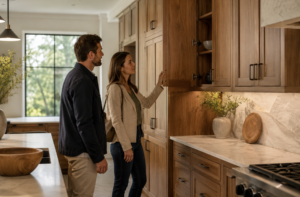
Why Solid Wood Kitchen Cabinets Are Taking Over the Retail Market

Retail News for Solid Wood Kitchen Cabinets

Kitchen design has always reflected the way people live, spend, and think about their homes. Over the past several years, one change has become especially noticeable in the retail home improvement market. Shoppers are paying closer attention to what products are made from, how long they are expected to last, and whether a renovation will still feel worthwhile years after the work is finished.

That shift is giving traditional materials new relevance. Cabinetry made from real wood, once viewed mainly as a premium or custom option, is gaining attention from homeowners who are less interested in disposable remodeling trends and more interested in craftsmanship, durability, and long-term value.

The timing is significant. The broader retail environment remains competitive, and consumers are being selective about where they spend their money. Recent reporting from Reuters has shown that shoppers are watching household budgets closely while still making room for purchases they believe deliver meaningful value. Home improvement fits naturally into that behavior because a kitchen renovation is not simply a decorative purchase. It becomes part of the home itself.

For retailers, cabinet manufacturers, designers, contractors, and homeowners, the result is a renewed appreciation for materials that feel permanent. That helps explain why Solid Wood Kitchen Cabinets are becoming increasingly important within the retail kitchen and remodeling market.

Retail Shoppers Are Becoming More Selective About Home Improvements

Consumers do not shop for kitchen cabinets the same way they shop for small household items. Cabinets are expected to remain in a home for years, often surviving multiple changes in paint colors, appliances, flooring, and decorating styles. That makes construction quality an important part of the buying decision.

The current retail environment is reinforcing that mindset. According to the National Retail Federation, Home Depot and Lowe’s continue to dominate the hardware and home improvement category, while specialty retailers are also finding opportunities by providing product knowledge and personalized project advice.

That distinction matters. Kitchen remodeling can involve measurements, installation requirements, wood species, finishes, hardware, storage configurations, and design choices that are difficult to evaluate from a product photograph alone. Consumers often want more guidance when the purchase is expensive and permanent.

Cabinet retailers that can explain construction differences have an opportunity to turn those concerns into confidence. A shopper comparing a solid wood cabinet with a lower-cost alternative may initially focus on price. Once the discussion turns to longevity, repairability, appearance, refinishing potential, and everyday wear, the comparison becomes much broader.

Retailers are therefore selling more than cabinetry. They are selling confidence that a major part of the kitchen will continue to function and look appropriate long after installation.

Real Wood Has Qualities That Are Difficult to Replicate

Manufactured materials have an important place in modern construction, but genuine wood brings characteristics that are difficult to reproduce perfectly.

Every piece of wood develops its own grain patterns, variations, texture, and color. Those differences create visual depth that homeowners often associate with quality craftsmanship. Instead of every surface appearing mechanically identical, natural variation gives the cabinetry character.

This fits with a wider movement toward warmer and more personalized interiors. Reporting on remodeling trends from Forbes noted that kitchens remain among the most popular spaces for homeowners to renovate and that kitchen projects continue to represent substantial household investments.

When consumers are putting significant money into a kitchen, many are willing to consider where that money will have the greatest visual and practical impact. Cabinets occupy a large percentage of the visible space in most kitchens. They frame appliances, define storage, influence traffic flow, and establish much of the room’s style.

Choosing real wood gives homeowners flexibility as well. Different species, stains, door profiles, finishes, and hardware can move the same basic material in very different design directions. Wood can work in traditional kitchens, contemporary spaces, farmhouse interiors, transitional homes, and highly customized luxury designs.

That versatility helps protect it from becoming tied too closely to a single short-lived trend.

The Retail Market Is Rediscovering Long-Term Value

The meaning of retail has changed considerably over time. As the Wikipedia overview of retail explains, retail encompasses the sale of goods and services directly to consumers through a wide range of channels and formats. Modern home improvement retail now extends far beyond simply placing products on shelves.

Consumers can research cabinet styles online, compare construction details, review photographs, visit showrooms, request samples, consult designers, and coordinate installation before making a final purchase.

That greater access to information can work in favor of higher-quality products because consumers have more opportunities to understand differences that might not be obvious at first glance.

A cabinet that costs less initially does not automatically represent the lowest long-term cost. Homeowners increasingly consider how a product may perform after years of doors opening and closing, spills, humidity, cleaning, impacts, and ordinary family use.

Solid wood components can often be repaired, sanded, refinished, repainted, or restored rather than automatically discarded when the appearance of the kitchen changes. That possibility adds another dimension to value.

A homeowner who decides to change from a dark traditional finish to a lighter contemporary appearance years later may have options that would be more difficult with certain lower-cost materials.

For retailers, that creates a useful distinction between selling primarily on price and selling on ownership value.

A Difficult Housing Market Can Make Existing Homes More Important

One of the most interesting forces affecting the cabinet market comes from outside the kitchen industry itself.

When homeowners are less likely to move, they often begin looking differently at the house they already own. Rooms that might have been tolerated for another year suddenly become remodeling candidates.

Recent Retail Dive reporting on the home sector has highlighted the pressure created by housing conditions, elevated interest rates, consumer confidence, and uncertainty surrounding discretionary purchases. At the same time, home improvement retailers continue serving consumers who need to maintain, repair, and improve existing properties.

The kitchen is a natural target for that spending because it is one of the most heavily used rooms in a home.

Instead of buying another house simply to get a larger kitchen, better storage, or a more appealing interior, some homeowners can invest a portion of that money into improving the home they already have.

Cabinetry becomes central to those projects.

The same trend is visible in major home improvement retail results. Associated Press reporting on Home Depot recently described continued consumer engagement with home projects even as larger renovation activity remained affected by the sluggish housing environment.

Those market conditions create an unusual combination. Consumers may be cautious about spending, yet the homes they already own continue aging. Kitchens still wear out. Storage needs still change. Families still remodel.

When people finally decide to undertake a major project, they may be more motivated to choose materials that will not need to be replaced again quickly.

Retail Customers Can See the Difference Between Temporary Style and Lasting Design

Kitchen trends move quickly. Cabinet colors, hardware finishes, backsplashes, countertops, lighting, and decorative details can dominate design media for a few years and then gradually give way to something else.

Wood does not depend on a single trend.

A wood cabinet can look rustic in one setting and sophisticated in another. The difference may come from the finish, hardware, door style, countertop, lighting, and surrounding architecture.

That adaptability makes real wood useful to retailers because it can serve customers with very different preferences without requiring the underlying material to change.

Recent design reporting has also pointed toward renewed interest in built-in cabinetry. Forbes coverage of 2026 interior design trends reported a sharp rise in consumer interest surrounding built-in cabinets and other personalized storage solutions.

Storage has become especially important as kitchens take on more responsibilities. Modern kitchens frequently serve as cooking areas, gathering spaces, homework stations, informal offices, entertaining areas, and storage centers.

Cabinetry has to support all of those activities while still contributing to the appearance of the room.

This is where quality construction becomes visible in everyday life. Doors need to remain aligned. Drawers need to operate smoothly. Shelving needs to support its contents. Frequently touched surfaces need to stand up to years of use.

A beautiful cabinet that performs poorly quickly loses its appeal. Retail customers are increasingly looking at appearance and function as parts of the same purchase.

Professional Remodelers Are Influencing Retail Cabinet Demand

Another important part of the retail story is the professional customer.

Contractors, remodelers, builders, installers, and designers often purchase through retail and wholesale distribution channels, making their preferences important to manufacturers and retailers alike.

Professionals tend to evaluate products differently from first-time homeowners because they have seen what materials look like after installation and, more importantly, after years of use.

Retail Dive reported on Home Depot’s professional customer segment that Pro customers continue to represent a significant growth opportunity for the home improvement retailer.

Professional influence can eventually shape consumer expectations. When remodelers explain why they prefer certain construction methods or materials, homeowners become more aware of those differences.

Retailers that serve both homeowners and professionals benefit from carrying cabinetry that can satisfy design expectations while also meeting practical installation and performance requirements.

This can be particularly important in kitchens because cabinets interact with so many other parts of a remodeling project. Countertops must sit correctly. Appliances must fit. Plumbing and electrical components may pass through cabinetry. Doors and drawers must clear neighboring surfaces. Measurements must remain precise.

Quality cabinetry makes those details easier to manage.

Digital Retail Is Making Cabinet Quality Easier to Research

The rise of digital shopping has not eliminated the need for physical retail. Instead, it has changed the order in which consumers make decisions.

A shopper may first discover a cabinet style through search, social media, a remodeling article, a digital showroom, or an online retail catalog. From there, the customer can compare finishes, construction methods, dimensions, reviews, installation options, and pricing before ever visiting a physical location.

Home improvement retailers are investing heavily in that digital experience. Modern Retail reporting on Lowe’s digital strategy has detailed the retailer’s work toward a more personalized online shopping experience, reflecting how important digital discovery has become even for products ultimately connected to physical home projects.

This increased transparency benefits retailers that can clearly communicate product quality.

Cabinet shoppers no longer have to rely solely on a display door hanging inside a showroom. They can research terminology, compare materials, inspect project galleries, learn how cabinets are constructed, and arrive at a store with a much stronger understanding of what they want.

That informed customer may be less likely to select cabinetry based on the lowest advertised price alone.

Digital retail also allows companies to tell a fuller product story. Wood species, construction techniques, customization options, finishes, installation examples, and completed kitchens can all become part of the buying experience.

For products in which craftsmanship matters, better information can make quality easier to recognize.

Homeowners Are Looking Beyond the Next Remodel

Perhaps the strongest advantage for real wood cabinetry is that it fits a broader change in how many homeowners think about renovation.

The goal is not always to create a room that photographs well today. Increasingly, the goal is to create a kitchen that will continue working as family needs and design preferences evolve.

Wood cabinetry lends itself naturally to that approach.

Hardware can be changed. Walls can be repainted. Countertops can eventually be replaced. Lighting can be modernized. A quality cabinet structure may remain through all of those changes.

That longevity matters in a retail environment where consumers are constantly asked to choose between inexpensive short-term products and higher-value purchases intended to remain useful for years.

It also gives retailers a more meaningful story to tell. Instead of competing entirely on promotional pricing, they can emphasize construction, craftsmanship, customization, service, design assistance, and the overall life of the product.

The result is a retail category in which quality can still differentiate one product from another.

Conclusion

Solid wood kitchen cabinetry is gaining ground in the retail market because it meets several needs at the same time. Homeowners want attractive kitchens, but they also want dependable storage, durable construction, design flexibility, and confidence that a major remodeling investment will continue to make sense years from now.

Retail conditions are helping strengthen that preference. Consumers are researching purchases more carefully, home improvement retailers are investing in both professional services and digital shopping experiences, and a challenging housing market is giving many homeowners another reason to improve the property they already own.

Real wood fits naturally into that environment because it combines craftsmanship with adaptability. It can complement changing design styles without losing the qualities that made it appealing in the first place.

For retailers, this represents more than another kitchen trend. It reflects a consumer market that is becoming increasingly interested in what lies beneath the surface of the products it buys. Construction, materials, service life, and lasting value are becoming part of the purchasing conversation again.

That is why solid wood cabinetry has the potential to remain a major force in kitchen retail long after today’s colors, hardware finishes, and decorating trends have changed.